
Method 1. Via Settings
Step 1: Press the Windows key on your keyboard, type Settings, and click Open.
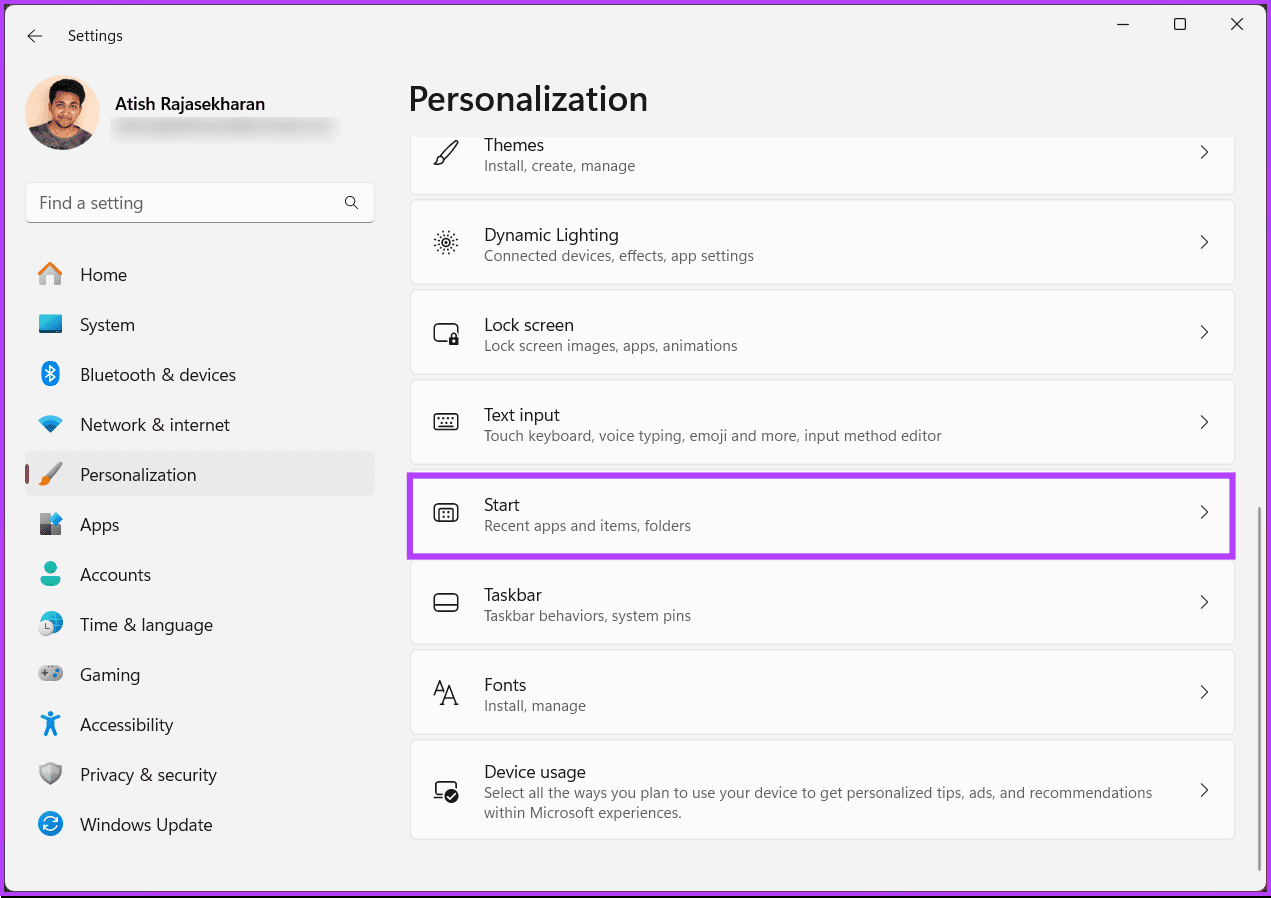
Step 2: Click on Personalization in the sidebar.
Step 3: Select Start on the right.
Step 4: Now, toggle off the following options:
- Show recently added apps
- Show most used apps
- Show recently opened items in Start, Jump Lists, and File Explorer
- Show recommendations for tips, shortcuts, new apps, and more.
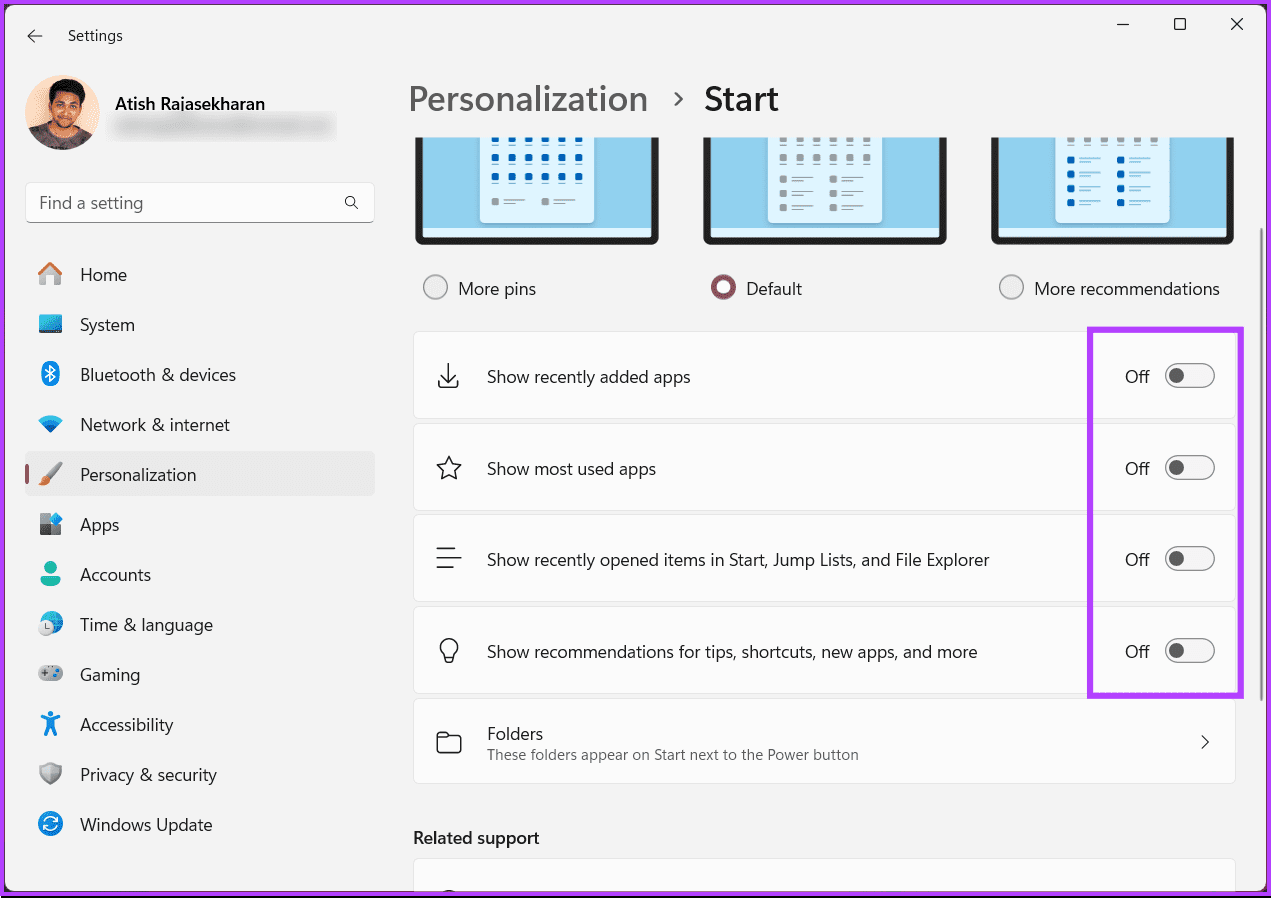
That’s it. The recommendations will be removed from your PC. If you wish to remove only selected recommendations, check out the next method.
Also Read: How to remove Bing from Windows 11
Method 2. From the Start Menu
Step 1: Click the Windows icon on the taskbar.
Step 2: Under the Recommended section, right-click on the item you want to remove and select Remove from list.
Note: If you have many items, you will notice a More button at the top right corner. You can also right-click items to remove them individually.
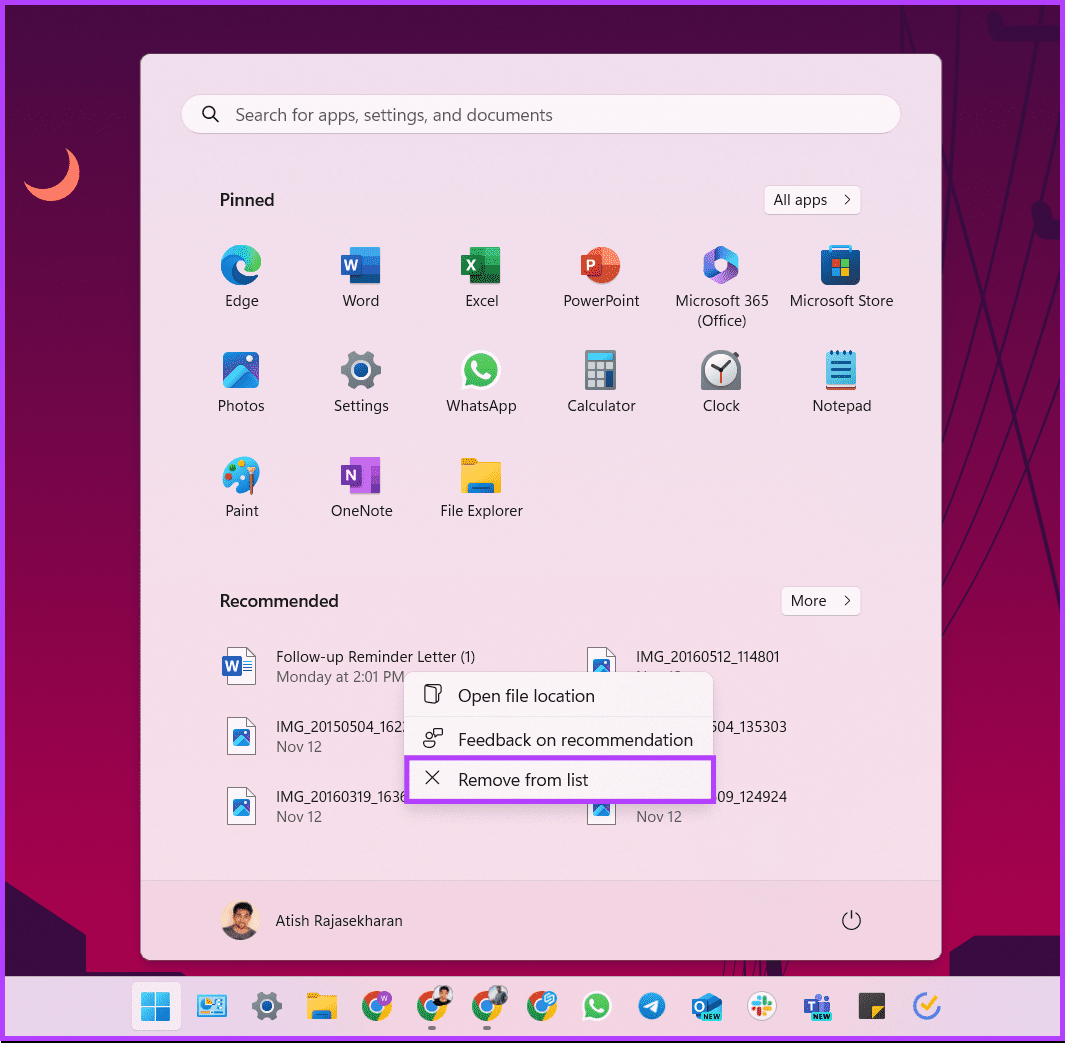
There you go. You have successfully removed the selected recommendations from the Start menu.
3. Remove Recommended Items Through Windows PowerShell
You cannot disable it in Windows 11 Home/Pro editions. This method works only on Windows 11 Education/SE editions.
Step 1: Press the Windows key, type PowerShell, and click Run as administrator. In the prompt, select Yes.
Step 2: Type (or copy-paste) the below command and press Enter.
New-ItemProperty -Path "HKLM:\SOFTWARE\Policies\Microsoft\Windows\Explorer" -Name "HideRecommendedSection" -PropertyType DWord -Value 1 -Force
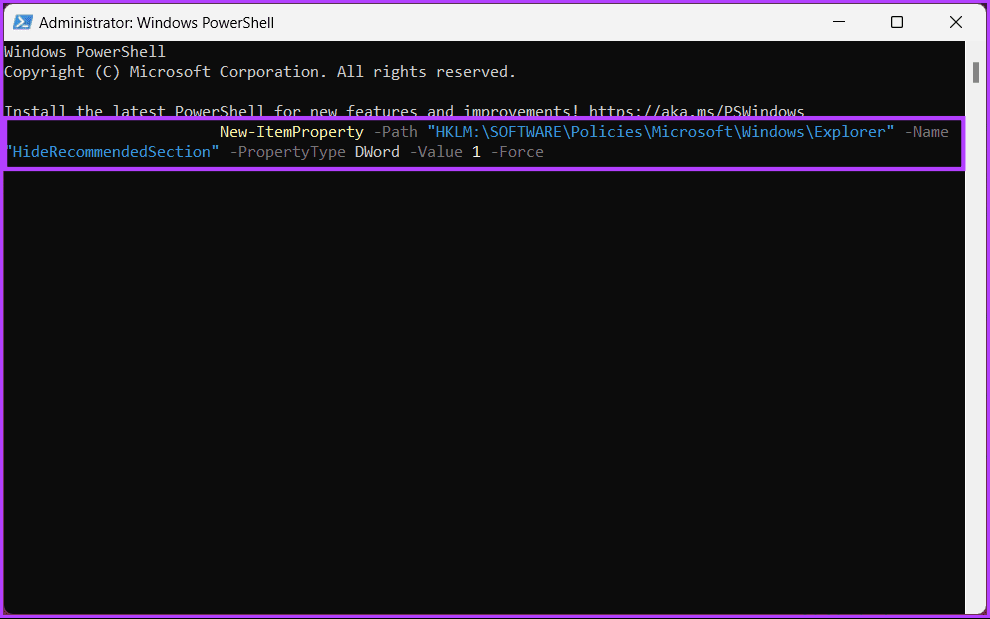
There you go. You have disabled recommendations in the Start menu.
Also Read: How to update DirectX on Windows 11
Method 4. Via Registry Editor
Step 1: Press the Windows key, type Registry Editor, and click Run as administrator. In the prompt, select Yes.
Step 2: In the top address bar, enter the following path.
HKEY_LOCAL_MACHINE\SOFTWARE\Policies\Microsoft\Windows\Explorer
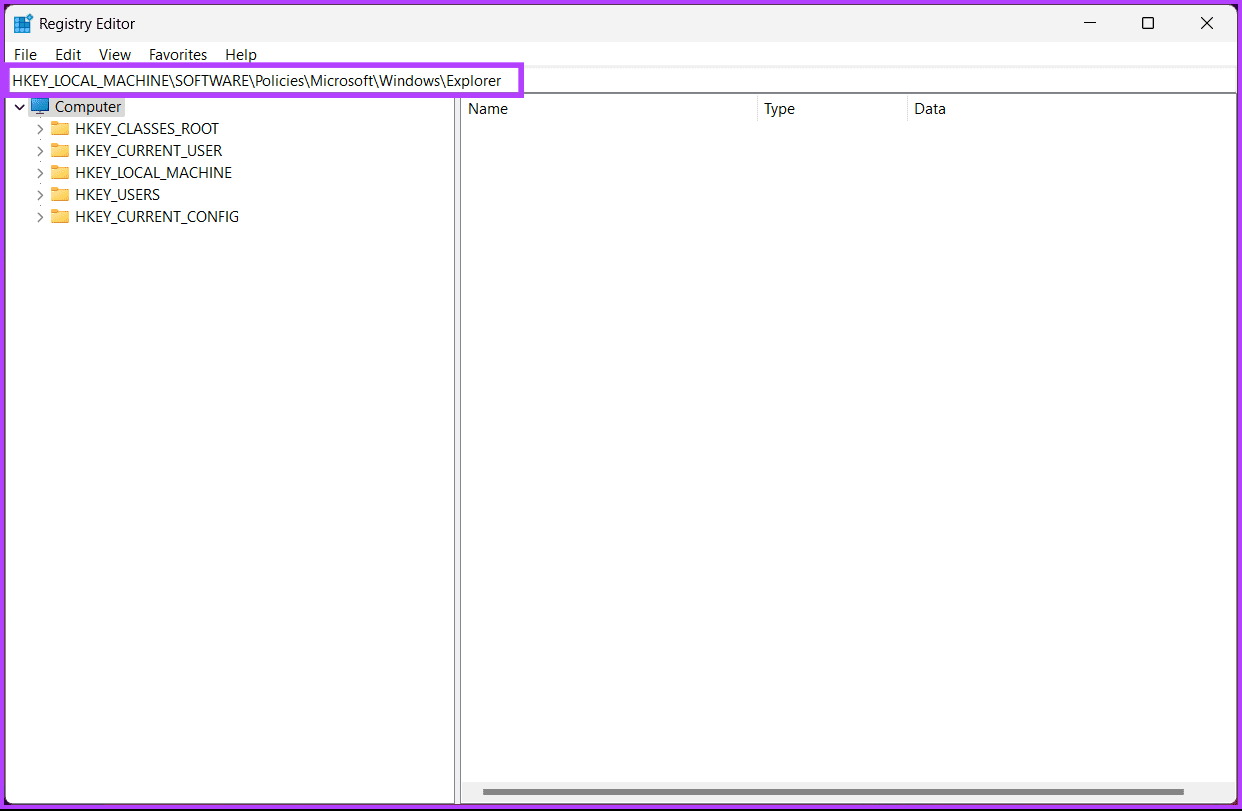
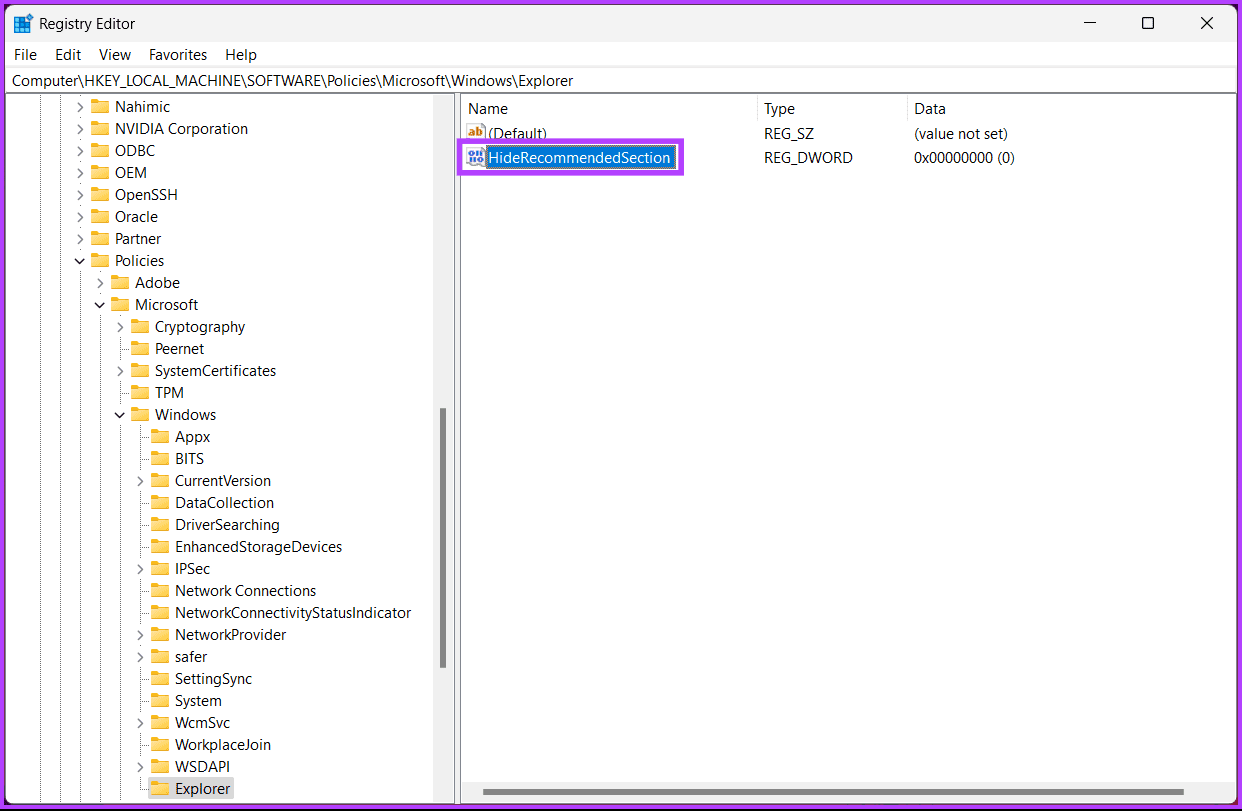
Step 3: Find and double-click on HideRecommendedSection.
Step 4: Now, type 1 in the Value Data field and press OK.
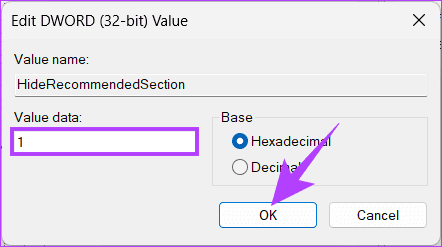
Finally, reboot the system to implement the changes. And that’s it! After booting up your PC again, you will have turned off recommendations in the Start menu.
Method 5. Using Group Policy Editor
The Group Policy Editor is only available for Windows 11 Pro and Enterprise versions. If you are using Windows 11 Home Edition, you can skip this method.
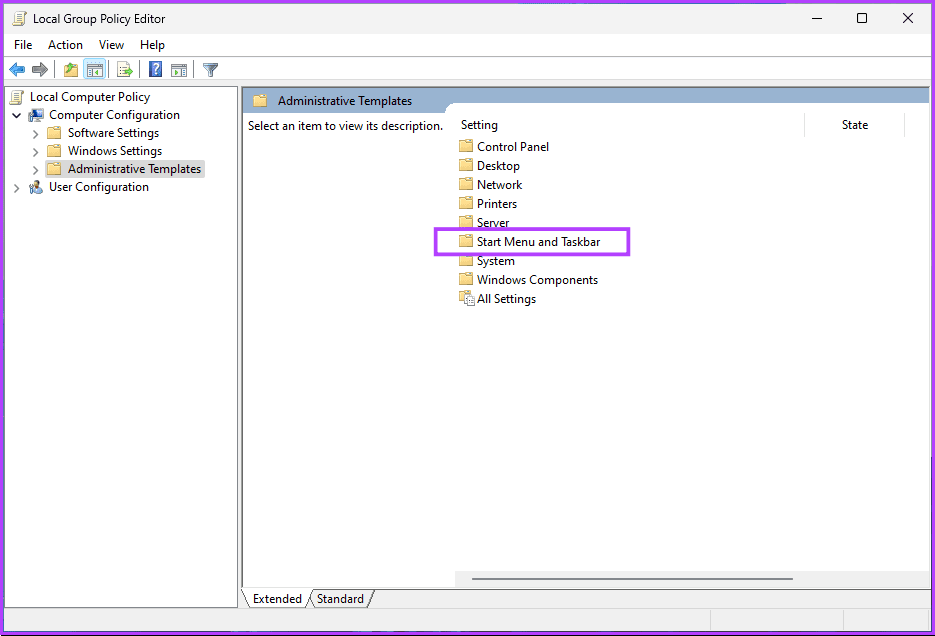
Step 1: Press the Windows keys, type gpedit.msc, and click Open.
Step 2: In the left pane, select Computer Configuration under Local Computer Policy.

Step 3: In the right pane, double-click on Administrative Templates.
Step 4: Select the Start Menu and Taskbar option.
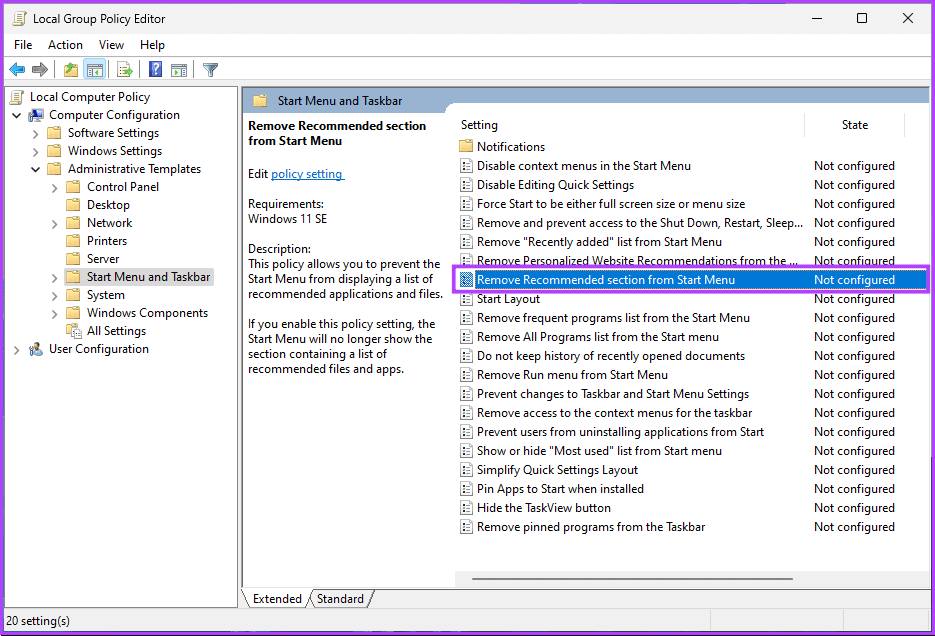
Step 5: Under the Start Menu and Taskbar option, double-click on Remove Recommended section from Start Menu.
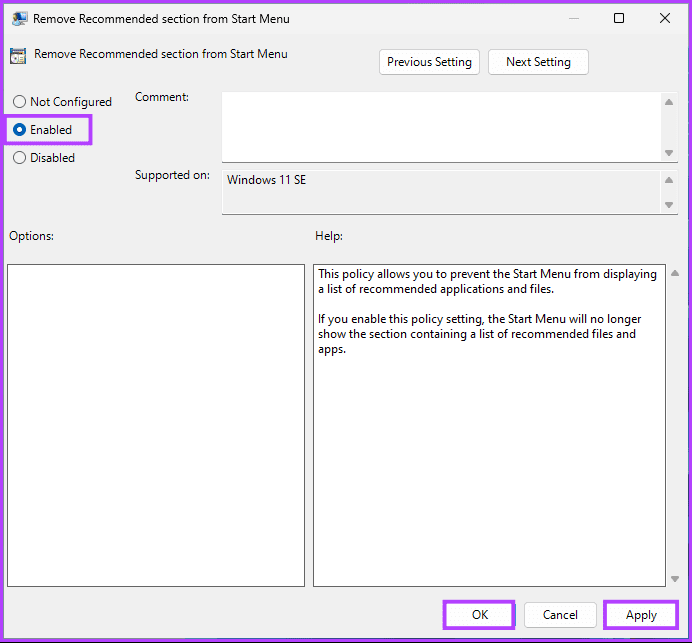
Step 6: Choose Enabled > click on Apply > OK.
FAQs
Yes, you can submit feedback to Microsoft through the Feedback Hub app. This lets you share your thoughts, suggestions, or concerns directly with the Windows development team.
The removal of Recommendations has a negligible impact on system performance. The primary purpose is personalization rather than resource-intensive functionality.
Was this helpful?
Last updated on 19 August, 2024
Read Next
 Top 6 Ways to Remove Managed by Your Organization in Chrome on Windows
Recently, while browsing the internet via Chrome on my Windows 10 PC, my antivirus received an update.
Top 6 Ways to Remove Managed by Your Organization in Chrome on Windows
Recently, while browsing the internet via Chrome on my Windows 10 PC, my antivirus received an update.
 7 Ways to Solve Safely Remove Hardware Icon Missing in Windows 10
Windows often advices to use the Safely Remove Hardware option before unplugging any USB device from a PC.
7 Ways to Solve Safely Remove Hardware Icon Missing in Windows 10
Windows often advices to use the Safely Remove Hardware option before unplugging any USB device from a PC.
 5 Ways to Fix Unable to Remove Bluetooth Device on Windows 11
Fix 1: Try Removing Device in Airplane Mode To start, enable Airplane mode and remove the Bluetooth device again.
5 Ways to Fix Unable to Remove Bluetooth Device on Windows 11
Fix 1: Try Removing Device in Airplane Mode To start, enable Airplane mode and remove the Bluetooth device again.
 6 Ways to Fix Unable to Remove Printer on Windows 11
Fix 1: Run the Printer Troubleshooter Start by running Windows' built-in printer troubleshooter to see if it can detect and resolve any pending printing errors.
6 Ways to Fix Unable to Remove Printer on Windows 11
Fix 1: Run the Printer Troubleshooter Start by running Windows' built-in printer troubleshooter to see if it can detect and resolve any pending printing errors.
 6 Ways to Remove Residual Files After Uninstalling Software on Windows
Method 1: Delete Registry Keys Registry keys are a database that includes an app's configuration and installation data, such as the product key, custom install settings, etc.
6 Ways to Remove Residual Files After Uninstalling Software on Windows
Method 1: Delete Registry Keys Registry keys are a database that includes an app's configuration and installation data, such as the product key, custom install settings, etc.
 5 Ways to Remove a Stuck Print Job in Windows 11
Fix 1: Clear Print Queue Using the Settings App One of the most straightforward ways to remove stuck print jobs is to clear the entire print queue in Windows 11.
5 Ways to Remove a Stuck Print Job in Windows 11
Fix 1: Clear Print Queue Using the Settings App One of the most straightforward ways to remove stuck print jobs is to clear the entire print queue in Windows 11.
 4 Ways to Remove Login Password From Windows 11
Method 1.
4 Ways to Remove Login Password From Windows 11
Method 1.
 5 Ways to Remove Bing from Windows 11
Method 1: Disable Bing Cloud Content Search Here's how to disable Bing from providing search results on your Windows PC.
5 Ways to Remove Bing from Windows 11
Method 1: Disable Bing Cloud Content Search Here's how to disable Bing from providing search results on your Windows PC.
The article above may contain affiliate links which help support Guiding Tech. The content remains unbiased and authentic and will never affect our editorial integrity.