
Stream YouTube, Netflix, or Other Websites on Steam Deck
Step 1: Ensure your Steam Deck is connected to the Internet. To do that, press the Steam button on your console. In the pop-up menu, select Settings.
Step 2: Now, tap on Internet from the sidebar. Then, connect to a Wi-Fi of your choice.

Step 3: Next, enter the Desktop Mode. For that, press the Steam button on your console and select Power.
Step 4: Select Switch to Desktop from the pop-up list.

Step 5: Next, launch a web browser. By default, the Steam Deck has the Mozilla Firefox browser installed. To access it, tap on the Application Launcher icon and navigate to Internet > Firefox Web Browser.
Step 6: In the address bar, enter the URL of the streaming website you wish to access.
Note: You can access any website, such as Netflix, Amazon Prime Video, or YouTube. For this guide, we’ll be using Netflix.
Step 7: Once the streaming website opens, log in or sign up and start watching movies.
Note: If the website requires you to enable DRM, you’ll get a notification at the top. Simply click on Enable DRM to proceed.
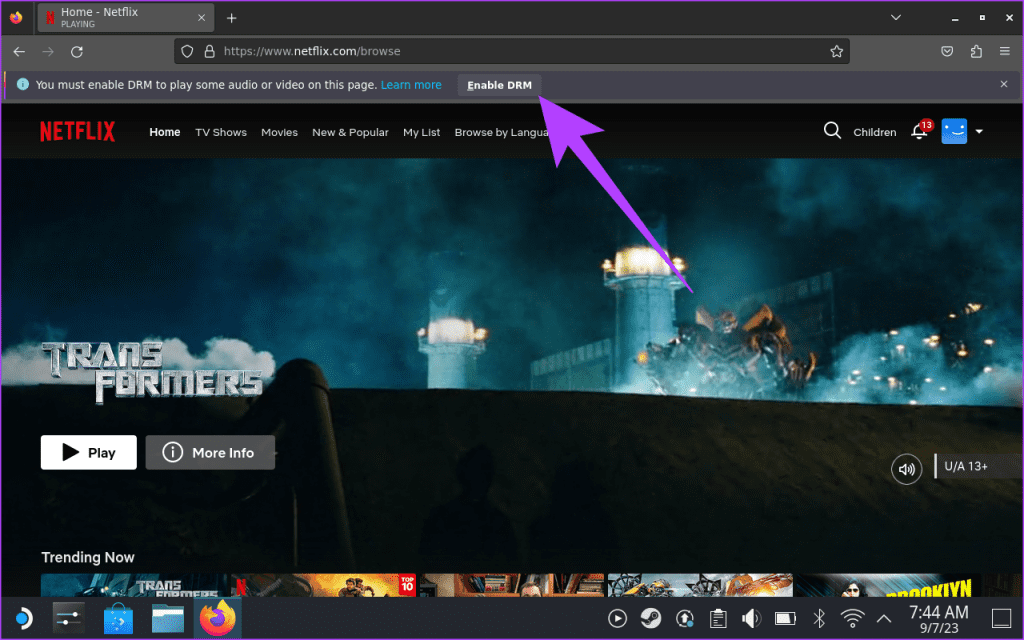
Step 8: That’s it. Now, refresh the webpage and enjoy your movie, TV show, or any video on your Steam Deck.
Watch Offline Movies and Videos on Steam Deck
If you don’t have an internet connection or prefer watching movies offline, you can also watch movies on Steam Deck stored in your device’s internal storage or external storage device. To watch offline movies on Steam Deck, download a media player app. We will go with the VLC media player for illustration.
Step 1: Open the Application Launcher and navigate to All Applications > Discover.
Step 2: Click on the Search section at the top. Type the name of the media player you wish to install and search for it. We’ll use VLC.
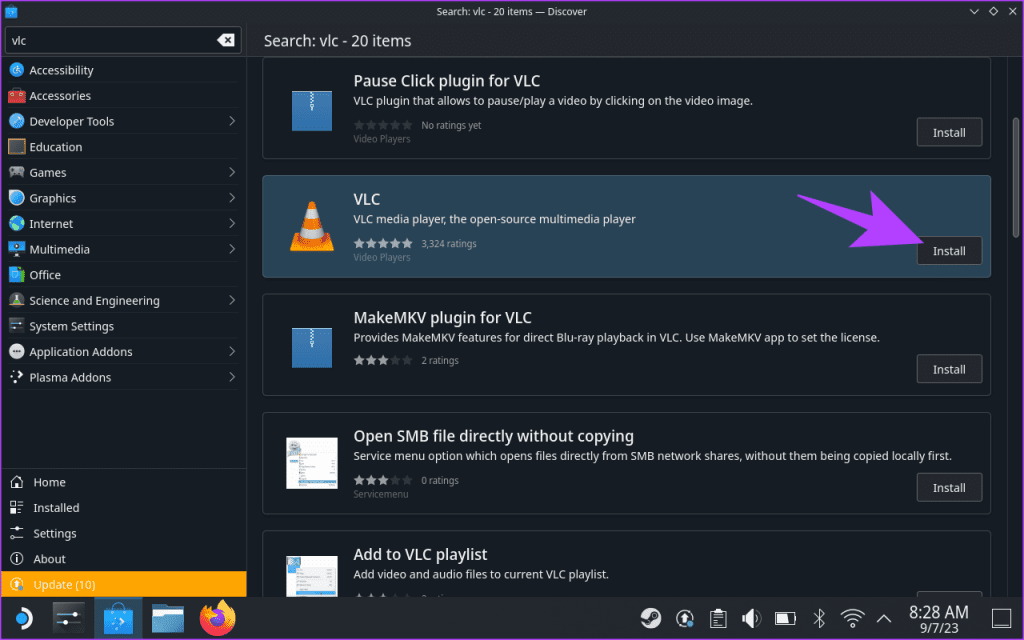
Step 3: From the search results, select VLC media player. Click on Install to proceed.
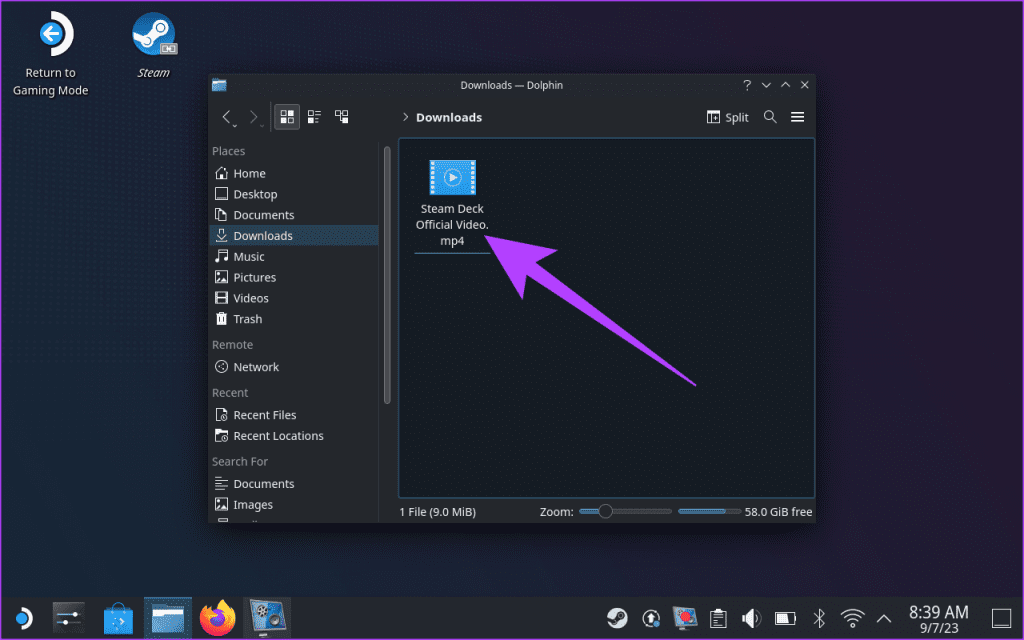
Step 4: Now that VLC is installed on your Steam Deck, it’s time to transfer media to your console. You can download videos from a cloud storage service, connect your Steam Deck to a PC, or transfer media to a microSD card.
Step 5: Once you have the media loaded, launch VLC. To do that, open the Application Launcher and navigate to Multimedia > VLC media player.
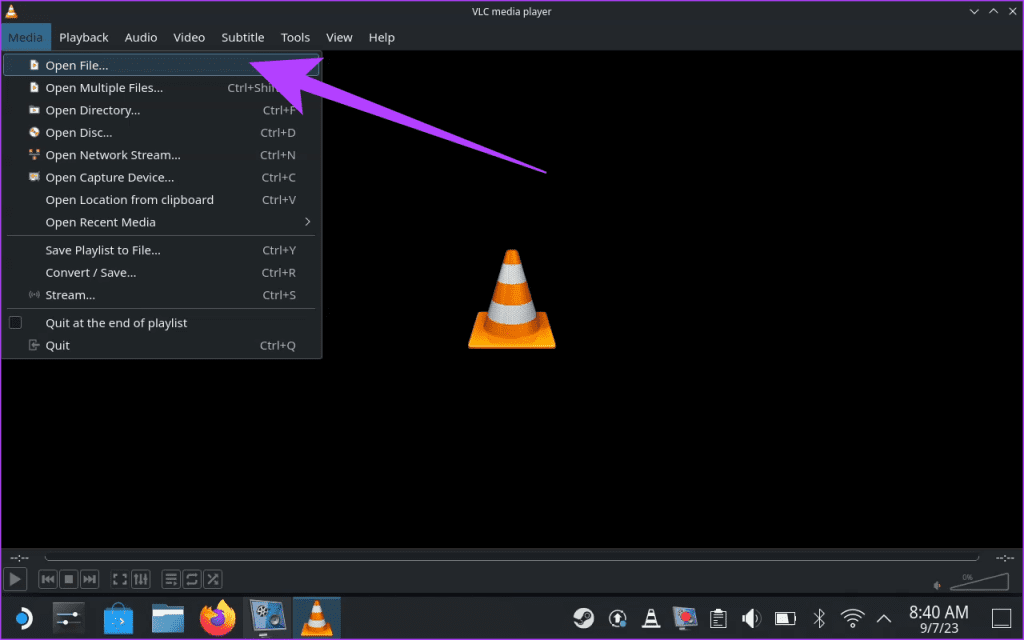
Step 6: Inside the VLC media player, click the Media option in the menu bar. Then, select the ‘Open File…’ option.
Step 7: Now, navigate to the folder containing the video file you want to play. Once done, highlight it and click on Open.
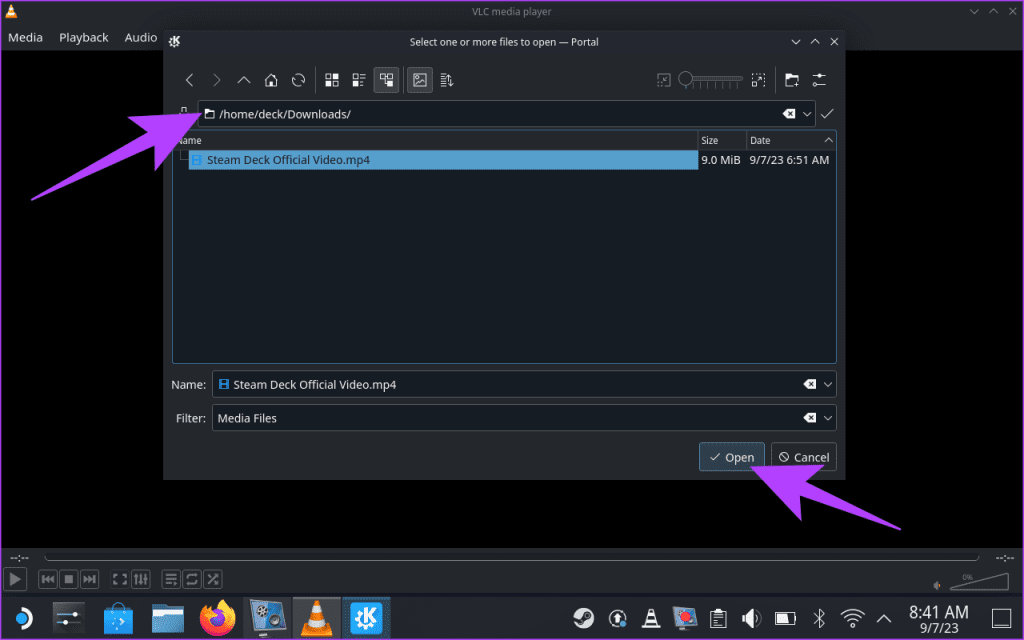
And that’s it. Your offline video file will now play inside the VLC media player.
Watch Movies on a Bigger Display With Steam Deck
You can also connect your Steam Deck to a TV or monitor if you want to watch movies on a bigger display. To do this, you will need a USB-C to HDMI cable. Alternatively, you can use a Steam Deck dock as well. Once the cable is connected, select the display output option as you like.
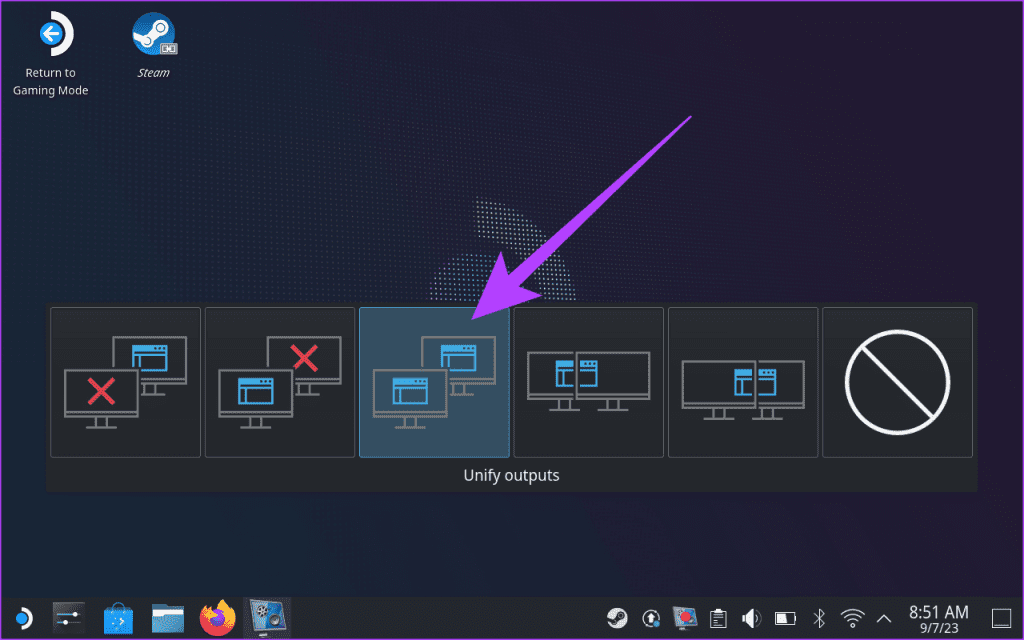
Once done, you can playback the media file on your TV, monitor, or any other external display connected to the Steam Deck.
FAQs on Watching Movies on Steam Deck
Yes, you can install Kodi on your Steam Deck. Kodi is a free, open-source media player that can be used to organize and play your movies, TV shows, music, and other media. You can install Kodi on your Steam Deck from the Discover Store app.
Netflix on Steam Deck is currently limited to 720p resolution. This is due to the platform’s DRM restrictions. However, considering the Steam Deck has an 800p display, this shouldn’t make a massive difference in quality.
In the Desktop Mode, the Steam Deck works like a normal PC. As such, you can access any streaming service through the web browser if it is supported in your location. Some popular streaming services Steam Deck supports are Netflix, Hulu, Amazon Prime Video, YouTube, etc.
The go-to recommendation is the VLC Media Player on Steam Deck. However, you can also check out SMPlayer, Haruna Media Player, PlasmaTube, or MPV. Additionally, you can check out Elisa, Amberol, and Vvave media players if you prefer listening to music files. Finally, Kasts is excellent for listening to podcasts on Steam Deck.
Was this helpful?
Last updated on 04 April, 2024
Read Next
 7 Best Steam Deck Protective Cases That You Can Buy
The Valve Steam Deck has been gaining popularity quickly thanks to its performance.
7 Best Steam Deck Protective Cases That You Can Buy
The Valve Steam Deck has been gaining popularity quickly thanks to its performance.
 How to Connect AirPods and Other Bluetooth Accessories to Steam Deck
Put Bluetooth Accessories Into Pairing Mode Before connecting your AirPods or other Bluetooth accessories to the Steam Deck, you must put them into pairing mode.
How to Connect AirPods and Other Bluetooth Accessories to Steam Deck
Put Bluetooth Accessories Into Pairing Mode Before connecting your AirPods or other Bluetooth accessories to the Steam Deck, you must put them into pairing mode.
 How to Install Proton GE on Steam Deck
 Step 1: Hold the power button and select Switch to Desktop on your Steam Deck.
How to Install Proton GE on Steam Deck
How to Install Proton GE on Steam Deck Step 1: Hold the power button and select Switch to Desktop on your Steam Deck.
 How to Install and Play Apex Legends on Steam Deck
Is Apex Legends Playable on Steam Deck Before we get into the nitty-gritty of installation, let's address the burning question: Is Apex Legends compatible with the Steam Deck?
How to Install and Play Apex Legends on Steam Deck
Is Apex Legends Playable on Steam Deck Before we get into the nitty-gritty of installation, let's address the burning question: Is Apex Legends compatible with the Steam Deck?
 How to Factory Reset a Steam Deck: A Complete Guide
Your Steam Deck is a powerful handheld gaming PC, but like any computer, it can accumulate glitches and performance issues over time.
How to Factory Reset a Steam Deck: A Complete Guide
Your Steam Deck is a powerful handheld gaming PC, but like any computer, it can accumulate glitches and performance issues over time.
 How to Check, Calibrate, and Disable the Gyro on Steam Deck
If you're the proud owner of a Steam Deck, you're already well-versed in the joys of portable gaming.
How to Check, Calibrate, and Disable the Gyro on Steam Deck
If you're the proud owner of a Steam Deck, you're already well-versed in the joys of portable gaming.
 How to Optimize Steam Deck’s Performance in Games
Valve's Steam Deck is easily one of the best handheld gaming consoles.
How to Optimize Steam Deck’s Performance in Games
Valve's Steam Deck is easily one of the best handheld gaming consoles.
 How to Install EmuDeck on Steam Deck
Valve's Steam Deck is one of the most powerful handheld gaming consoles on the market, giving you the power of a gaming PC in a portable format.
How to Install EmuDeck on Steam Deck
Valve's Steam Deck is one of the most powerful handheld gaming consoles on the market, giving you the power of a gaming PC in a portable format.
The article above may contain affiliate links which help support Guiding Tech. The content remains unbiased and authentic and will never affect our editorial integrity.