
Picking the right self-improvement apps can feel overwhelming when every store category promises a different result or purpose. The best self-improvement apps right now could do different work; for example, one app can help you record goals as a habit tracker for repeated actions.
Another solution may provide daily lesson activities for continuous learning linked to work goals and professional development. According to the Blinkist review, the book audio-summary format can suit a self-improvement routine when you want to review a key idea about productivity or leadership before deciding whether to read the whole material.
You can also use an AI assistant that can help you build a self-growth plan based on your requirements and the options you are considering. Before choosing your app, you need to concentrate on your aims and choose the one that currently matches your task and needs. This list provides descriptions of the apps that serve different purposes.
They are tested across learning, habit tracking, meditation, fitness tracking, and focus tools, and also selected because they fit into a daily routine!
Top Self-Improvement Apps by Categories and Task at a Glance
We based our selection criteria on how we tested each app for at least seven consecutive days, evaluated the depth of its free plan, checked whether it includes habit tracking or streak support, and assessed whether users still engaged by week four.
Effective apps promote daily use to build routines and monitor progress; gamification and visual tracking can enhance consistency in habit formation.
This list considers global rankings for self-improvement apps and user feedback as secondary signals, especially for self-improvement apps with community challenges or group features. These signals cannot show which app will suit every person, so each entry explains what the app does and the task it can support.
1. Nonfiction Summaries and Spaced Repetition App for Busy Learners
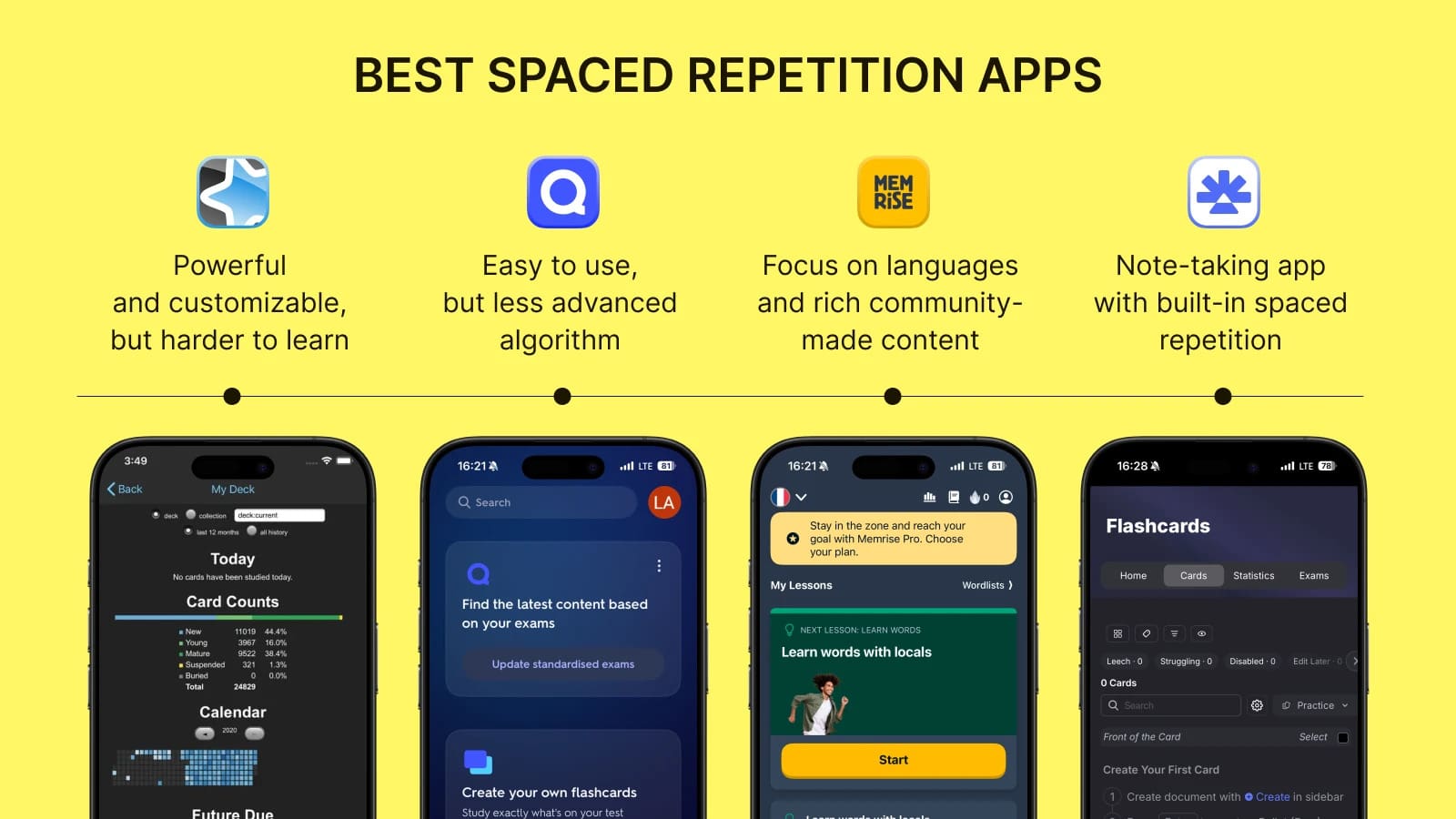
Apps that offer short lessons or summaries can support continuous learning. For example, the Headway application turns that idea into a daily habit with its library of over 2,500+ nonfiction book summaries, each taking 12 to 20 minutes to read or listen to.
Core features include text and audio modes, offline access, spaced repetition flashcards that surface key ideas over time, and a TikTok-style Shorts tab with quizzes and visual facts. Headway applies the spaced repetition principle, which helps with 90% long-term retention, and wraps it in a more polished mobile experience. For readers weighing alternatives, you can see how Headway’s personalization and interactive elements help build habits and skills while you read key insights from bestselling nonfiction books.
The free plan gives one summary per day with no credit card required. Paid plans run $12.99/month, $29.99/quarter, or $89.99/year, all with a 7-day trial. The built-in streak counter acts as a learning habit tracker, and short sessions fit into any daily routine before or after deep work blocks.
Headway is a strong pick among self-improvement apps for students and professionals who need fast concept exposure for exam prep or career skills. Headway ranked 4th among TIME’s World’s Top EdTech Companies in 2025!
2. Microlearning App for Daily Growth in 10 Minutes
The Nibble microlearning app delivers interactive lessons across 35+ topics in around 2 to 10 minutes per session. Supporting daily personal growth, the app provides the easiest features tailored to specific habits, as it covers learning across all-around knowledge topics like psychology, history, art, finance, science (STEM), gardening, and more:
- Formats include text, audio, short video, quizzes, games, and AI-powered simulations (including a small talk simulator for practicing conversation)
- The learning curve stays low because each lesson is self-contained, so personalized learning paths, streaks, and reminders keep daily habits on track
- Users do not feel that the sessions are overwhelming and feel inspired to continue learning
Pricing: a 7-day free trial unlocks full content; subscriptions run about $19.99/month or $59.99/year, depending on the location. Nibble works well as one of the best self-improvement apps for students; medical students and others can use its revision-friendly quizzes and topic breadth during short breaks between classes. The app covers learning that goes beyond self-help into general knowledge, which keeps curiosity alive across weeks of use.
3. Top Apps for Focus and Calm

Mindfulness practices can help lower stress and improve focus. Meditation can enhance memory and problem-solving abilities. Here are the structured apps for mindfulness that use short, guided exercises to facilitate practice:
- Headspace offers a 10-day Basics course for beginners, SOS sessions for acute anxiety, and Sleepcasts. Headspace improves focus and reduces stress with ten-minute meditations; studies show measurable changes in focus and stress within two to three weeks. Pricing: $12.99/month or $69.99/year; student plans sometimes available around $9.99/year.
- Calm is used by over 100 million people worldwide for mindfulness and sleep. Its sleep stories (narrated by voices like Matthew McConaughey), breathing exercises, soundscapes, and the Daily Calm meditation cover relaxation techniques and stress management more broadly than Headspace. Pricing: $14.99/month or about $69.99/year; family plans around $99.99/year for up to six accounts. For a completely free alternative, Insight Timer offers over 150,000 free guided meditations.
4. Fitness Tracking and Sleep Apps for Physical Health
Physical health underpins personal growth. Improving personal development works best when focusing on key pillars like mindfulness and habit formation, but movement, nutrition, and rest are just as foundational:
- Strava tracks runs, cycling, and walks via GPS and adds social accountability through clubs, leaderboards, and community challenges. Its free tier logs workouts; the paid plan adds deeper analytics and personalized coaching insights.
- MyFitnessPal is used by over 200 million people worldwide. It allows users to log meals and track calories against a database of over 14 million food entries. MyFitnessPal connects to over 50 fitness apps and wearables, turning calorie intake monitoring into a measurable daily habit. The free plan covers core logging; Premium adds faster barcode scanning and nutrient breakdowns.
- Sleep Cycle uses phone sensors or Apple Watch to estimate sleep stages, show trends, and wake users during light sleep. Poor sleep undermines every other improvement effort; Sleep Cycle’s free tier handles basic analysis, while premium adds snore detection, weekly reports, and better sleep programs. For runners starting from zero, the Couch to 5K app helps users train for a 5K in nine weeks.
5. Focusing on Habits: Apps that Turn Good Intentions into Daily Routine
Habit formation drives self-improvement. Daily habit tracking improves consistency and reduces resistance; therefore, these apps differ in tone but offer gamified or science-driven solutions:
- Habitica turns habit tracking into a role-playing game for motivation. Habitica uses RPG mechanics to motivate habit tracking; completed habits earn experience and gold, while missed habits damage your avatar’s health. Guilds and parties create social accountability through shared goals. The game layer makes daily task management and to-do list management feel like quests. Core features are free, and the optional premium runs $47.99/year on iOS.
- Everyday offers a visual, minimalist grid where you mark completed habits and watch streaks grow. No RPG elements, no noise; just a clean habit tracker for people who want less stimulation.
- Loop Habit Tracker is free and open-source for Android users. No ads, no account required. It handles reminders, charts, and simple habit tracking with strong privacy.
- Streaks can track up to 24 habits for Apple users, syncing across iPhone and Apple Watch.
6. Focus and Digital Wellbeing: Apps for Deep Work
Reducing screen time and distractions is a key area for personal development. If you feel busy but unproductive, the bottleneck is usually attention, not time:
- Forest gamifies focus by growing virtual trees as you stay productive. You can start a focus session, and a virtual tree grows on screen. Leave the app early, and the tree dies, so this simple mechanic helps users stay focused during study or work blocks. Android: free; iOS: paid app. Forest Plus (about $59.99/year) unlocks additional trees and soundscapes; some users preferred the old one-time purchase model.
- Freedom blocks distracting websites across all devices simultaneously. The free plan allows sessions up to two hours with custom blocklists on multiple devices. You can use premium ($8.99/month) to add scheduled recurring sessions, Locked Mode, and sessions longer than two hours.
How to Build a Self-Improvement Stack You Will Actually Use
So, what are the single best self-improvement apps right now? There is no universal answer to this question. For most busy readers and learners, Headway or Nibble are the strongest starting points because they combine short daily learning, habit tracking mechanics, microlearning, and polished mobile experiences.
If better sleep or stress management is the priority, Calm or Headspace may feel like the best app. Fitness-focused users often treat Strava as their primary personal growth tool.
The apps you will still open 30 days from now matter more than downloading nine apps today. Using just one or two apps targets specific improvement areas and reduces overwhelm. Best practices for using self-improvement apps include avoiding app overload and selecting specific goals.
You can also focus on your goals first and choose daily self-improvement practices that are more effective when integrated into daily life. You can start with two apps: one for learning or habit tracking and one support app to use them daily for three to four weeks!
Was this helpful?
Last updated on 28 October, 2026
Read Next
 3 Ways to Check Monthly or Daily Data Usage on iPhone
Method 1: Check Cellular Data Usage in the Settings App Here's how you can easily check mobile data usage on your iPhone within the Settings app.
 10 Best Messaging Apps That Work Without a Phone Number
Sharing your phone number on chatting platforms can expose you to unwanted spam, potential security breaches, and even compromise your identity.
 4 Ways to Fix Apps Not Updating on Android TV
Basic Fixes Check internal storage: App updates need sufficient storage on your Android TV in the long run.
 5 Best Apps to Find Clothes by Picture on Android and iOS
Let's face it, we'll always be tempted to go for just one piece of clothing, which expands to four, and the list goes on.
 5 Best Object Identifier Apps for Android and iOS
Have you ever come across a weird object, like a cute little plant or a cool wine bottle, and wondered which brand or species it is from?
 How to Text Someone Anonymously: Best Apps and More
Things to Consider When Sending Anonymous Texts Before we share how to send an anonymous text, consider some things.
 5 Best eSIM Apps for International Travel (iPhone and Android)
1.
 4 Best Free Audiobook Apps for iPhone and Android
Books are often considered great companions, but we're sure many struggle to concentrate and remain engaged while reading one.
The article above may contain affiliate links which help support Guiding Tech. The content remains unbiased and authentic and will never affect our editorial integrity.