

Retirement planning has always asked people to make large, lasting decisions with very little certainty. You have to guess how long you will live, what things will cost decades from now, how markets will behave, and what kind of life you will want once work stops. Most people find this hard. Many put it off entirely.
Software now offers to carry some of that load. AI tools can read your accounts, run projections in seconds, and answer questions at two in the morning without charging by the hour. That is a real change, and it deserves a fair look.
It also has limits, and some of them matter a great deal. The useful question is no longer whether a machine can help plan a retirement. It is which parts of the job it handles well, which parts it handles badly, and how to tell the difference.
Why Retirement Planning Resists Easy Automation

To judge any tool fairly, it helps to know what the job actually involves. Retirement planning looks like a math problem. Underneath, it is mostly a people problem.
The Math Is The Easy Part
Compound growth, withdrawal rates, and inflation adjustments follow known formulas. A spreadsheet from the 1990s could run them. Computers have always been good at this, and AI adds little that is new on the pure arithmetic side.
The Inputs Are The Hard Part
The trouble starts with what goes into the formulas. Will you retire at 62 or keep working part-time until 70? Will a parent need care? Will you sell the house or stay put? A projection is only as honest as the guesses feeding it.
Small changes in those guesses, such as spending $400 more a month or retiring two years earlier, can move the final answer by hundreds of thousands of dollars. That gap between clean math and messy life is where AI tools shine in some ways and stumble in others.
Where AI Helps Good Financial Planning
Start with the strengths, because they are real and often undersold.
Patience Without A Meter Running
A human advisor’s time is expensive, so most people ask fewer questions than they should. AI changes that math. You can ask what happens if you retire in March instead of January, then ask again with a different savings rate, then ask a third time because you forgot about your old 401(k). Nobody sighs. Nobody bills you.
For people who feel embarrassed about how little they know, this alone lowers the barrier to starting. Tools built for AI financial planning let users explore these what-if questions in plain language, which turns a dreaded chore into something closer to a conversation.
Seeing Accounts Side By Side
Most households spread their money across a checking account, a workplace plan, an IRA or two, maybe a brokerage account, and some debt. Few people ever see all of it on one screen. AI tools that link these accounts can spot patterns a person would miss, like cash sitting idle while a credit card carries a balance, or three retirement accounts holding nearly the same funds.
Catching Small Leaks Early
Good planning is often less about bold moves and more about stopping slow drains. Software can flag a fund with high fees, a subscription you forgot, or a savings rate that quietly slipped after a raise. None of these is dramatic. Over thirty years, they add up.
Running The Numbers On Timing
Some retirement choices hinge on dates, and AI handles date math well. Claiming Social Security is a good case. According to the Social Security Administration, someone with a full retirement age of 67 who claims at 62 receives a permanently reduced benefit, cut by about 30 percent.
An AI tool can lay out what that trade looks like against your savings, your health, and your spouse’s benefits in a way that is much easier to grasp than a government table. Those strengths are worth having. Still, each one carries a matching weakness, and that is where caution comes in.
What AI Money Advisors Still Get Wrong
The same traits that make AI helpful can also make it misleading. Speed and confidence feel like expertise even when they are not.
Sure-Sounding Answers From Thin Data
AI tools tend to give clean, confident replies. That tone can hide how shaky the underlying guess is. If you tell a tool you spend “about $5,000 a month” but you actually spend $6,200, every chart it draws afterward is wrong, and it will not know. A good human planner often pushes back on vague numbers. Software usually just takes them.
Rules That Keep Changing
Tax law and retirement rules shift often. The age for required minimum distributions has changed more than once in recent years, and current IRS guidance on required minimum distributions sets it at 73 for most people.
An AI model trained on older data may repeat an outdated rule with full confidence. Tools that pull from current sources do better, but the burden of checking still falls partly on you.
Missing The Person Behind The Numbers
This is the biggest gap. A spreadsheet cannot tell that you panic when markets drop, that your marriage has different money values on each side, or that you secretly want to open a bakery at 64. These things drive real decisions.
A person who sells everything during a crash can undo a flawless plan in one afternoon. Human advisors, at their best, act partly as coaches who keep clients from their own worst instincts. Software can remind. It struggles to persuade.
Blurry Lines Of Responsibility
When a licensed advisor gives bad advice, there are rules, records, and sometimes legal remedies. With AI tools, it is often unclear who stands behind a suggestion. Some are built by regulated firms. Others are general chatbots with no duty to you at all. That difference rarely shows up in the answer itself.
Given both sides, the practical path is not to pick one camp. It is to use AI for what it does well while keeping human judgment in charge.
How To Use An AI Advisor Without Handing Over The Keys

A few habits make the difference between a helpful tool and a risky one.
Treat Every Output As A First Draft
Use AI projections to frame questions, not to settle them. If a tool says you can retire at 60, ask what assumptions got it there. Change them. See how fragile the answer is. A plan that falls apart when returns drop by one percent is a plan that needs work.
Check The Humans In The Loop
Many AI services connect you to a human advisor at some point. Before trusting that person with decisions, look them up. FINRA’s free BrokerCheck tool shows a professional’s licenses, work history, and any disciplinary record. It takes two minutes.
Feed It Honest Numbers
Pull three months of real spending before asking for a retirement projection. Include the irregular costs, like car repairs and holiday travel, that people forget. The tool’s accuracy rises or falls with yours.
Save The Big Calls For Deliberate Review
Choosing when to claim Social Security, whether to convert to a Roth IRA, or how to draw down savings are decisions with long tails. Let AI map the options. Then sit with them, talk them over with a spouse or a professional, and decide on your own schedule.
A Robot Can Help Plan Your Retirement, Not Run It Alone
AI can make retirement planning faster, cheaper, and far less intimidating. It handles numbers, patterns, and repeated questions with ease, and it opens the door for people who might otherwise never start. Its weak spots are just as clear: it trusts whatever it is told, it can fall behind changing rules, and it cannot read the fears and hopes that shape real choices. The strongest approach uses the machine for clarity and keeps people in charge of judgment. A robot can help plan your retirement. It should not be the only one planning it.
Was this helpful?
Last updated on 06 October, 2026
Read Next
 5 Best Lightning to HDMI Adapters Money Can Buy
If you often use your iPhone or iPad to mirror your phone’s content to your TV, then a Lightning to HDMI adapter or connector might be just what you are
5 Best Lightning to HDMI Adapters Money Can Buy
If you often use your iPhone or iPad to mirror your phone’s content to your TV, then a Lightning to HDMI adapter or connector might be just what you are
 6 Best 6×9 Car Speakers Money Can Buy
6x9 car speakers are a popular choice among car audio enthusiasts.
6 Best 6×9 Car Speakers Money Can Buy
6x9 car speakers are a popular choice among car audio enthusiasts.
 7 Smartphone Cameras That Can Give DSLRs a Run for Their Money
There was a time when one had to carry around a dedicated camera on vacations to click pictures.
7 Smartphone Cameras That Can Give DSLRs a Run for Their Money
There was a time when one had to carry around a dedicated camera on vacations to click pictures.
 6 Best Free Websites for Floor Plan Design
It’s 2019, and today, the internet acts as the gateway to a myriad of different tools and websites.
6 Best Free Websites for Floor Plan Design
It’s 2019, and today, the internet acts as the gateway to a myriad of different tools and websites.
 3 Ways to Change Power Plan in Windows 11
Method 1: Change the Power Plan Using the Settings App By default, your PC is set to Balanced power mode, but you can change it to "Best performance" or "Best
3 Ways to Change Power Plan in Windows 11
Method 1: Change the Power Plan Using the Settings App By default, your PC is set to Balanced power mode, but you can change it to "Best performance" or "Best
 Netflix Standard vs. Premium: Which Netflix Plan Is Best for You
Netflix Subscription Plans At a Glance While Netflix provides three plans in total, the Standard and Premium plans take the cake.
Netflix Standard vs. Premium: Which Netflix Plan Is Best for You
Netflix Subscription Plans At a Glance While Netflix provides three plans in total, the Standard and Premium plans take the cake.
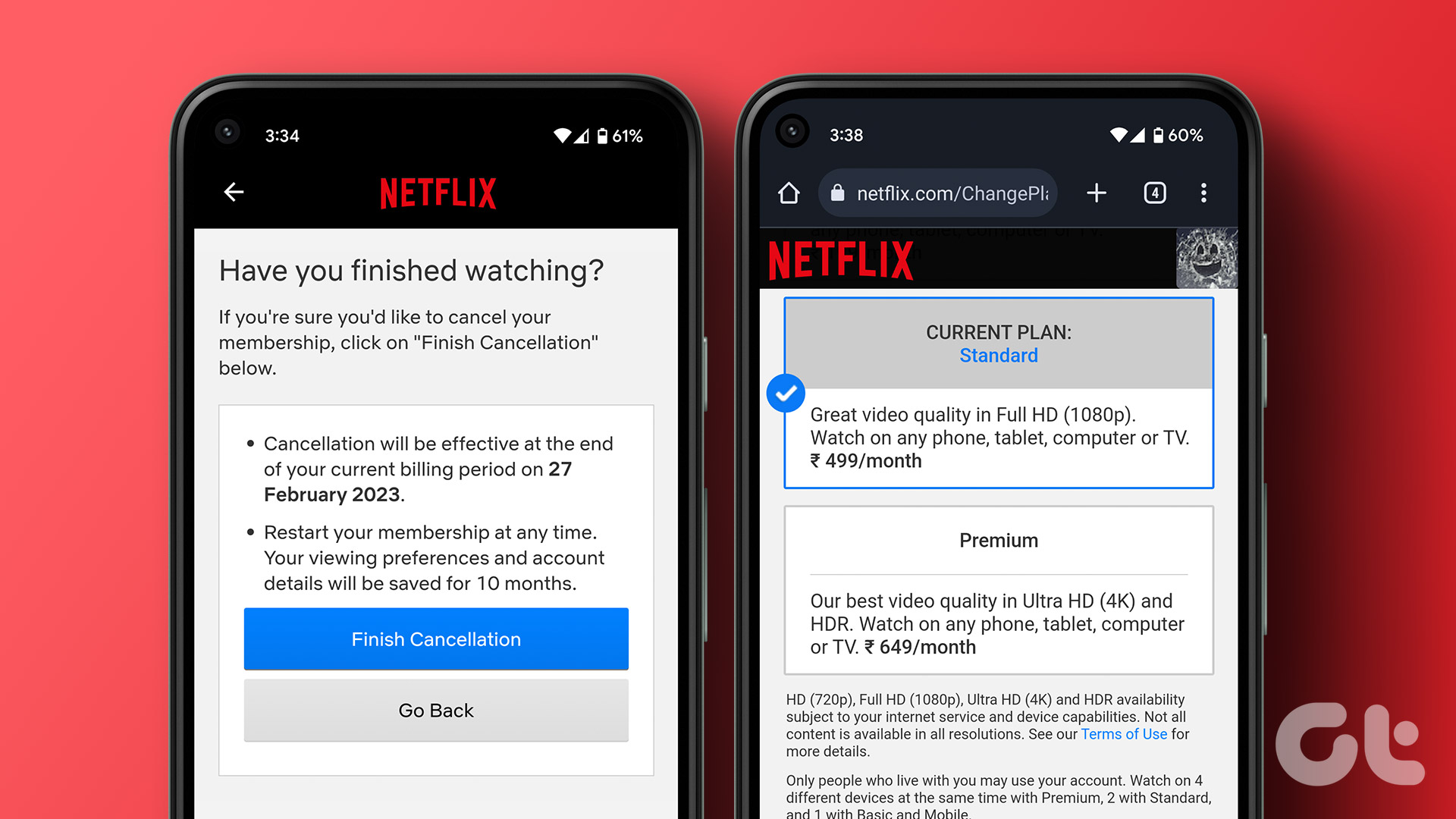 How to Change or Cancel Netflix Plan on Any Device
How to Change Your Plan on Netflix If you've made your decision and wish to change your Netflix plan, here's how to do it.
How to Change or Cancel Netflix Plan on Any Device
How to Change Your Plan on Netflix If you've made your decision and wish to change your Netflix plan, here's how to do it.
 5 Quick Ways to Fix Can’t Change Power Plan in Windows 11
Are you unable to change the power plan on your Windows PC?
5 Quick Ways to Fix Can’t Change Power Plan in Windows 11
Are you unable to change the power plan on your Windows PC?
The article above may contain affiliate links which help support Guiding Tech. The content remains unbiased and authentic and will never affect our editorial integrity.