
Most people pick a bank once and never look back, even as fees and interest rates have changed underneath them.
Most people choose a bank once and then stop thinking about it. The account gets opened during college or at a first job, the paycheck starts landing there, and years slip by. The banking market, meanwhile, has changed a great deal.
Fees that once seemed normal now look dated. Interest on everyday balances, which used to round down to nothing, can now add up to real money. Features that were rare a decade ago have become standard at many institutions.
The account that holds your paycheck does more work than any other financial product you own. It pays your bills, collects your deposits, and sits between you and nearly every purchase you make. Loyalty to the wrong one has a cost, even if that cost never shows up as a single dramatic charge. A second look is overdue.
Why The Account Your Paycheck Lands In Matters
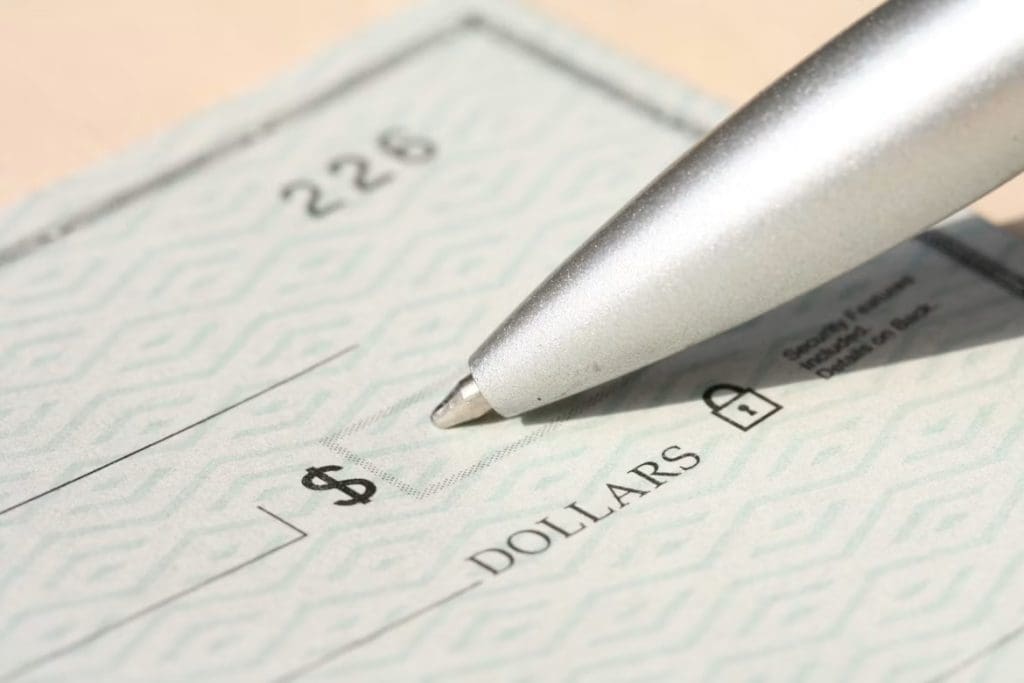
Before comparing options, it helps to see what an average account quietly takes from you. The losses are small and spread out, which is exactly why they go unnoticed.
Small Fees, Steady Leaks
A $12 monthly maintenance fee sounds minor. Over a year, it’s $144, paid for the privilege of storing your own money. Add a single overdraft charge, often around $35, and a couple of out-of-network ATM withdrawals, and a “free” relationship can cost more than a streaming subscription.
Money That Sits Still
Then there’s the interest you aren’t earning. Suppose you keep an average of $3,000 in checking. At 0.01 percent, that balance earns about 30 cents a year. At 3 percent, it earns roughly $90. Nobody gets rich from that difference. Still, it’s free money for doing nothing more than parking your paycheck somewhere smarter.
With those two leaks in mind, the following six account types each fix at least one of them.
6 Everyday Bank Accounts Worth Switching To

None of these is right for everyone. Each one suits a particular way of handling money, so read them with your own habits in mind.
1. High-Yield Online Checking
Online banks skip the cost of running branches, and many pass those savings along as interest on checking balances. Monthly fees are usually absent. The tradeoff is physical access: depositing cash can be awkward, and help comes by phone or chat rather than across a counter. Before opening one, confirm the bank carries FDIC insurance. The FDIC’s deposit insurance page explains the standard coverage of $250,000 per depositor, per insured bank, for each ownership category.
2. Combined Checking And Savings Accounts
Some banks now bundle checking and savings under one login, with separate “buckets” or “vaults” for goals like rent, travel, or an emergency fund. Money moves between them instantly. Automatic round-ups and scheduled transfers make saving feel less like a chore. This setup works well for people who mean to save but rarely get around to moving money by hand.
3. Credit Union Checking
Credit unions are owned by their members, not shareholders. That structure often means lower fees, friendlier overdraft policies, and better rates on car loans down the road. Membership rules are looser than many people assume; living or working in a certain area is often enough. Deposits at federal credit unions are protected by the NCUA, which describes its share insurance coverage in plain terms.
4. Fee-Free Checking With Early Direct Deposit
Many banks now release your paycheck as soon as your employer sends the payment file, sometimes up to two days before payday. For anyone whose rent and payday fall on awkward dates, that gap matters. Pair it with no monthly fees and no minimum balance, and you have an account that simply stays out of your way.
5. Rewards Checking
Rewards accounts pay high interest or cash back, but only if you meet monthly conditions. Common ones include a minimum number of debit card purchases, electronic statements, and a set amount of direct deposit. The high rate usually applies only up to a capped balance.
If your spending habits already match the rules, this can be one of the best-paying options around. If they don’t, you’ll earn little.
6. Brokerage Cash Management Accounts
Investment firms offer accounts that act like checking, complete with debit cards and bill pay. Your cash is often “swept” into several partner banks, which can stretch insurance coverage beyond a single bank’s limit.
These accounts shine for people who already invest and want everything in one place. Check the ATM network and whether paper checks are available before committing.
Why A Good Checking Offer Matters When You Switch
Picking the right type of account is half the decision. The other half is timing, and that’s where sign-up promotions come in. Banks want your direct deposit because it keeps you active and loyal. Many will pay a cash bonus, sometimes several hundred dollars, for moving it over.
Since you’re planning that exact move anyway, collecting a bonus for it simply makes sense. Comparing current bank account offers side by side helps you see what each bank asks for in return, whether that’s a minimum deposit amount, a deadline, or a holding period before you can close the account.
Read the terms closely. A large bonus attached to an account with ongoing fees can lose its value within a year or two. Bonuses are also typically reported as interest income, so expect a tax form. The best offer is the one attached to an account you’d happily keep.
How To Move Your Paycheck Without The Headaches

Once you’ve chosen an account, the switch itself takes a bit of planning. Done in the right order, it causes almost no disruption.
Map Every Automatic Payment
Pull your last three months of statements. List every automatic charge: rent, utilities, phone, insurance, subscriptions, loan payments. Quarterly and annual charges are the ones people forget, so look back further if you can.
Redirect Direct Deposit Early
Most employers let you change direct deposit through a payroll portal in minutes. The change can take one or two pay cycles to kick in. Some people split their paycheck at first, sending a portion to the new account while the rest keeps covering bills in the old one.
Keep The Old Account Open Briefly
Leave a small cushion in your old account for at least a month. Stray charges will show up. Once a full billing cycle passes with no activity, transfer the remaining balance and close it in writing. Ask for confirmation that the account is closed with a zero balance.
The Payoff Arrives Every Payday After That
Where your paycheck lands shapes how much you pay in fees, how much your idle cash earns, and how easily you can save. Most people never revisit that choice, even as better options have become common.
Taking an honest look at your habits, matching them to the right account type, and switching with a clear plan turns a routine decision into a lasting improvement. The effort is modest, and it pays off every payday after that.
Was this helpful?
Last updated on 06 October, 2026
Read Next
 Three Best Mechanical Keyboards to Get In 2026
Mechanical keyboards are the go-to if you need to use them for any extended amount of time.
Three Best Mechanical Keyboards to Get In 2026
Mechanical keyboards are the go-to if you need to use them for any extended amount of time.
 Google Drive Desktop 2026: Ransomware Detection & Restore Explained
Quite a lot of our day-to-day workflow now happens in the Cloud, whether by convenience or necessity.
Google Drive Desktop 2026: Ransomware Detection & Restore Explained
Quite a lot of our day-to-day workflow now happens in the Cloud, whether by convenience or necessity.
 Best Proxy Providers to Buy From in 2026: Tested & Compared
Choosing a proxy provider used to be straightforward.
Best Proxy Providers to Buy From in 2026: Tested & Compared
Choosing a proxy provider used to be straightforward.
 Best Android Apps for Budgeting in 2026
Most people do not fail at budgeting because they do not know what a budget is.
Best Android Apps for Budgeting in 2026
Most people do not fail at budgeting because they do not know what a budget is.
 What Size of Power Bank Should You Buy
Power banks are the lifeline for many who are often on the road.
What Size of Power Bank Should You Buy
Power banks are the lifeline for many who are often on the road.
 How to Stop iPhone Camera From Switching to Macro Mode Automatically
Apple introduced a new Macro Mode in the camera app with the iPhone 13 Pro.
How to Stop iPhone Camera From Switching to Macro Mode Automatically
Apple introduced a new Macro Mode in the camera app with the iPhone 13 Pro.
 3 Ways to Fix Telegram Calls Not Switching to Speaker on iPhone
Common Fixes Check volume levels - Go to Settings > Sounds & Haptics and maximize the Ringtone and Alerts volume slider.
3 Ways to Fix Telegram Calls Not Switching to Speaker on iPhone
Common Fixes Check volume levels - Go to Settings > Sounds & Haptics and maximize the Ringtone and Alerts volume slider.
 4 Ways to Fix iPhone Keeps Switching to Mobile Data From Wi-Fi
Basic Fixes Move close to your router: Poor Wi-Fi signal can force your iPhone to switch to mobile data instead of Wi-Fi.
4 Ways to Fix iPhone Keeps Switching to Mobile Data From Wi-Fi
Basic Fixes Move close to your router: Poor Wi-Fi signal can force your iPhone to switch to mobile data instead of Wi-Fi.
The article above may contain affiliate links which help support Guiding Tech. The content remains unbiased and authentic and will never affect our editorial integrity.