
Why Can’t I Connect to a 5G Network
Before we go into full-blown troubleshooting mode, it is wiser to check whether your region, carrier, and phone support 5G or not. So which iPhone and Android phone support 5G?
- Device Compatibility –
- iPhone – Apple incorporated 5G support from iPhone 12. And except for iPhone SE 2 (2020), every iPhone model since is 5G compatible.
- Android phones – It’s not as straightforward. You’ll have to do a quick spec check (online or offline) to check for 5G compatibility.
- 5G availability – While the 5G rollouts might be in full swing in the country, your area still might be deprived. You can figure this out with a quick Google search or check out Ookla’s helpful 5G tracking map.
- Carrier support – Ensure that your carrier offers support for it. Most importantly, double-check that your SIM and data plan are 5G compatible. The easiest way to do so is to call the carrier support center and get clarity on these things.
Basic Fixes
- Update OS – As and when a region is blessed with 5G, an update is scheduled to enable 5G support from the developer’s end. So, before we move on, it’s wiser to update the OS to unlock 5G compatibility.
- Check your data usage – If your 5G has suddenly stopped working, the culprit might be the data limit of your cellular plan. You can tally the data usage and then remedy it accordingly.
- Disable low-power mode – Some devices including iPhone 12 series, disable 5G when in Low Power/Power Saving mode. So, if your 5G is not working, try turning off the battery-saving settings to fix the issue.
- Turn Airplane Mode on and off – When dealing with network-related issues such as a phone won’t connect to 5G, AirPlane Mode can help. It restarts the network connections, hopefully eliminating the bugs or settings behind the error.
- Restart your phone – If restarting your network setting didn’t work, restarting the phone might do the trick. The idea is the same, to reset and resolve any discrepancies.
- Re-insert the physical SIM – The idea is to clear the SIM cache and eradicate any bug or setting that might be stopping you from accessing 5G. Simply, take out the SIM from your device, restart your phone, and insert the device back again.
Note: Don’t try this step for an eSIM, unless directed by the carrier. If you delete an eSIM, you’ll need to contact the carrier and set up a new one.
Fix 1. Switch from LTE to 5G or 5G auto
Well if you’re in the 5G range and still LTE or 4G shows up in the status, there might be a chance that 5G is disabled on your device. So, here’s how to check and turn on 5G.
On iPhone
Launch the Settings app and go to Cellular → Celluar Data Options → Voice & Data. Here, ensure that either 5G On or 5G Auto is selected.
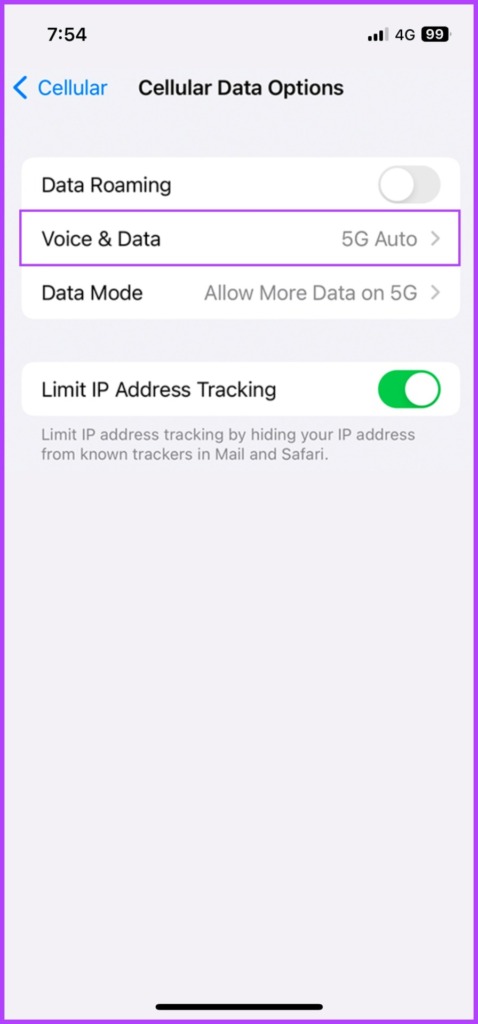
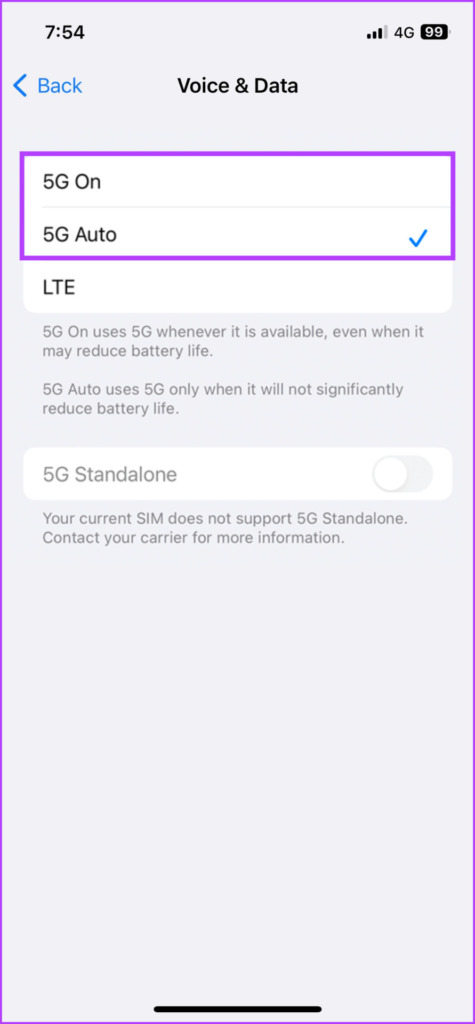
For battery-saving purposes, it is suggested to use 5G Auto at all times or to switch off 5G when you’re not in range. You can also read this guide to manage 5G settings and data-saving modes for further clarity.
On Android Phones
Step 1: Go to Settings → Connections or Network & internet. Tap Mobile networks or SIMs.

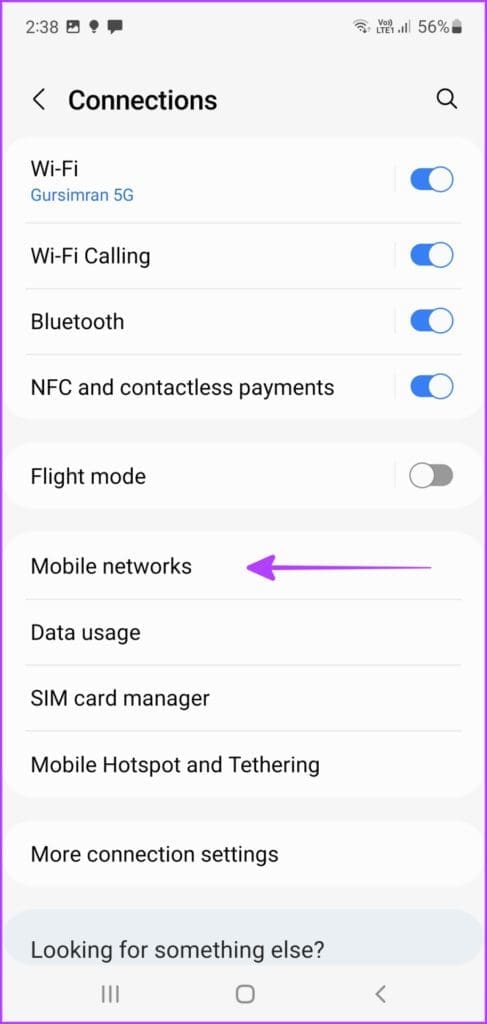
Step 2: Here, tap Network mode or Preferred network type.
Step 3: Select Global/Auto or 5G/LTE/3G/2G (auto connect) to enable 5G.
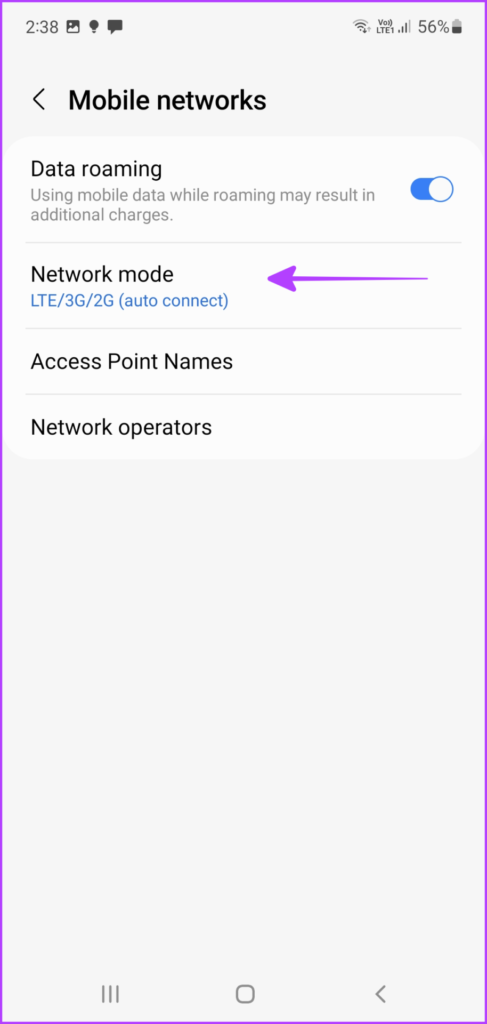
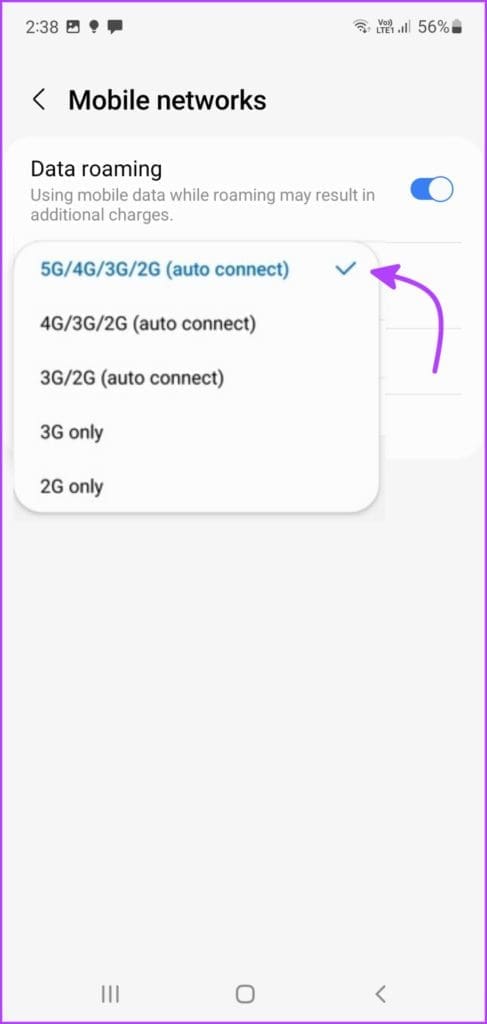
Now that 5G is turned on, hopefully, you’ll see the 5G icon on the status bar. If not, move on to the next step.
Fix 2. Reset the APN Setting of Your Phone
The Access Point Name (APN) is the network path defined for cellular data connectivity. So, your 5G connectivity issue might be stemmed from some issue in this section.
While below are the steps, you can follow the instructions provided by your network provider (Google it!).
On iPhone
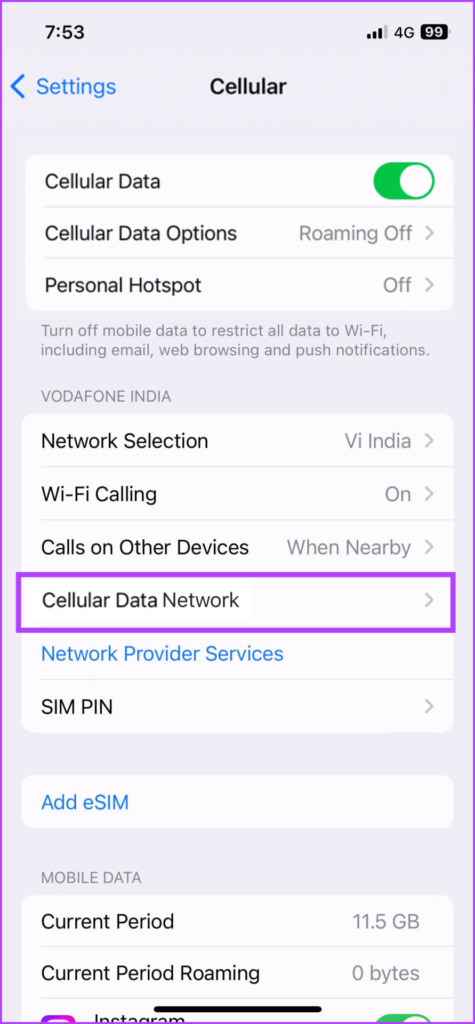
Step 1: Go to Settings → Cellular/Mobile Data. Here select Cellular/Mobile Data Network.
Step 2: Tap Reset Settings and then Reset again.

On Android Devices
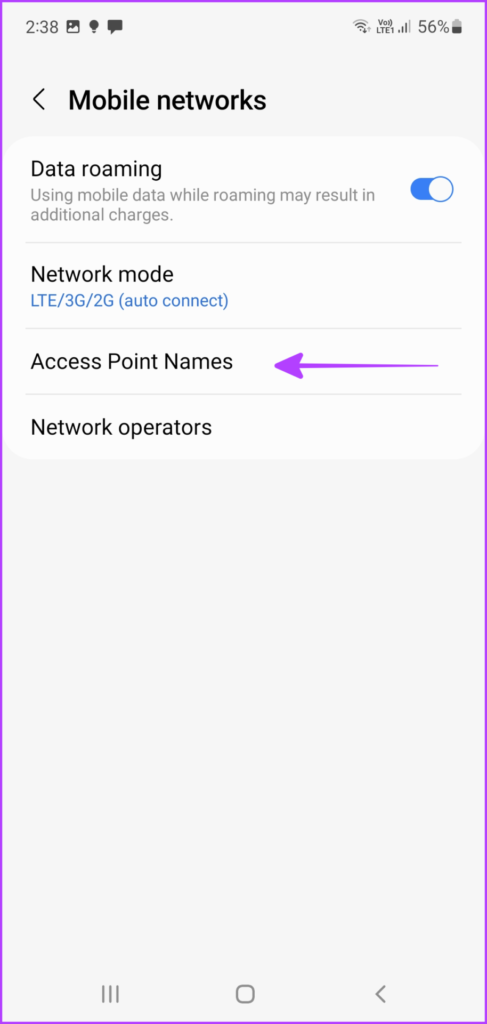
Step 1: Launch Settings and go to Connections.
Step 2: Tap Mobile Networks and select Access Point Names. Here, tap the Menu button (three-dot icon)
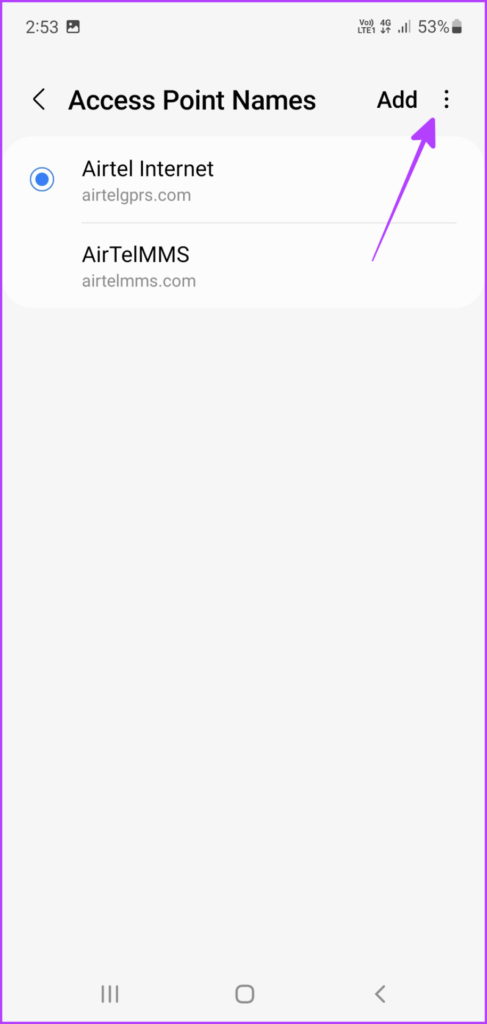
Step 3: Select Reset to default.
Step 4: Tap Reset again to confirm the action.


Fix 3. Reset Network Settings
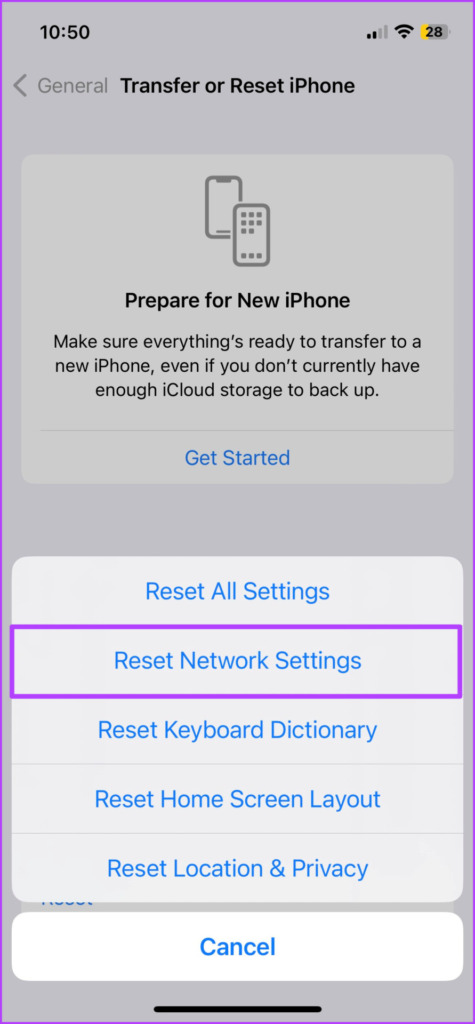
It’s time to bring out the big guns if 5G is still not working. Resetting network settings, i.e., returning to default settings on your iPhone or Android device can help. However, when you do so, everything from your Bluetooth devices and Wi-Fi passwords to VPN configurations will be erased. So, proceed with caution.
On iPhone
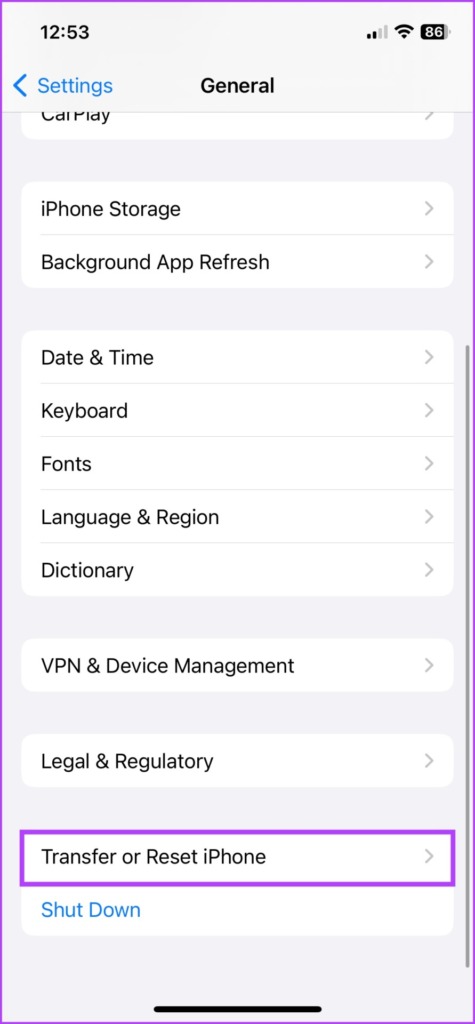
Step 1: Go to Settings → General. Scroll down to ‘Transfer or Reset iPhone‘.
Step 2: Select Reset.
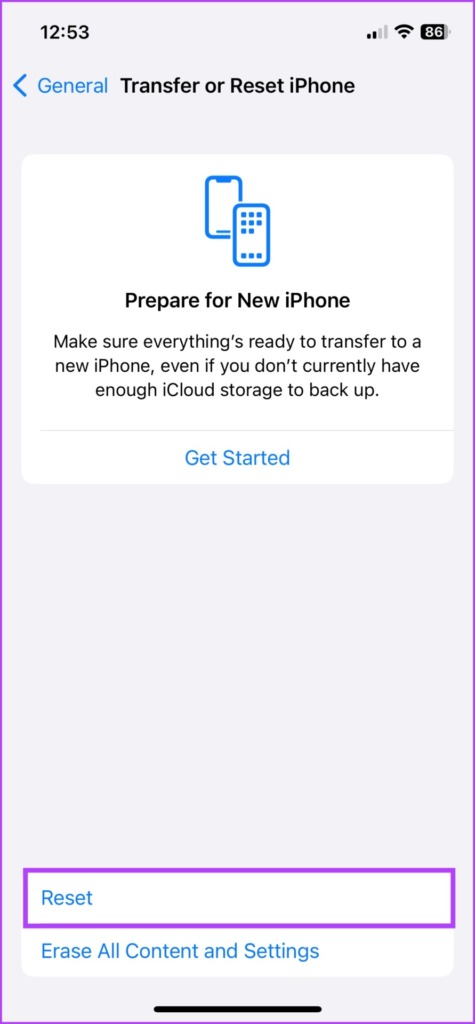
Step 3: Now, select Reset Network Settings. Enter the passcode if prompted.
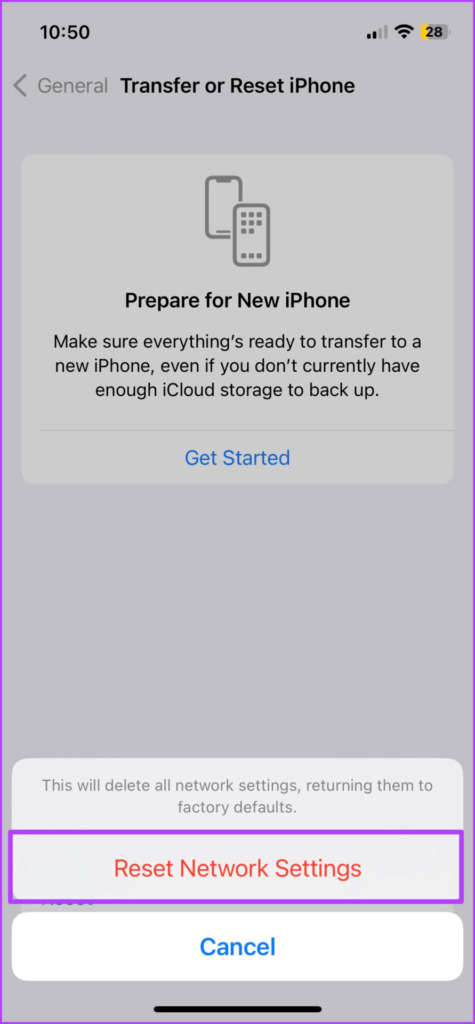
Step 4: Tap Reset Network Settings again to confirm the action.
On Android Devices
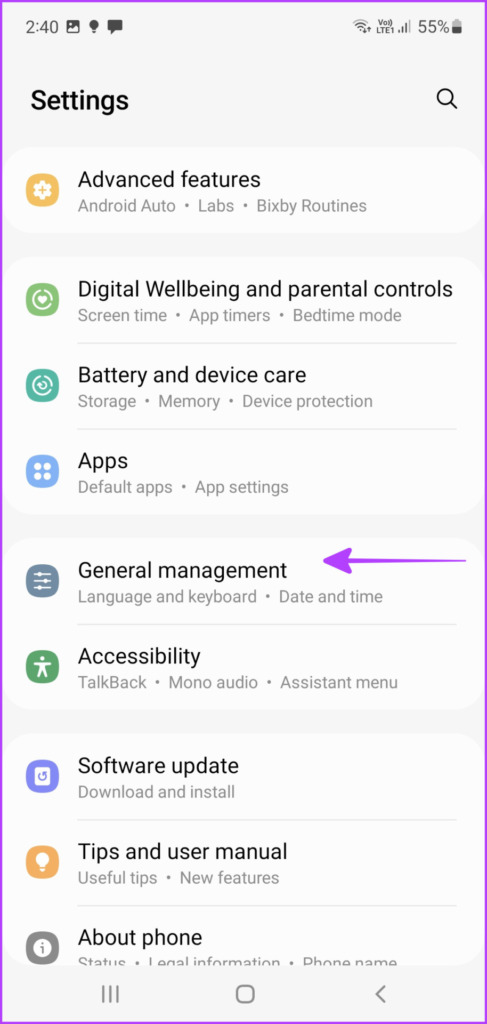
Step 1: Open the Settings app. Scroll down to General management or System.
Step 2: Tap Reset.

Step 3: Here, select Reset network settings. It might be renamed as Reset Wi-Fi, mobile & Bluetooth in some devices.
Step 4: Tap Reset settings again.


If 5G is not working on your iPhone or Android even after trying all the above fixes, the last resort is to call your carrier. Get in touch with their support team to decipher and resolve the issue.
FAQs on 5G Not Working On iPhone and Android
While your phone is built-in with 5G compatibility, an OS update might be needed to unlock it. So update! Another issue could be your carrier, also check with them and enable whatever settings and data plans are required.
Firstly, check if the region has a 5G connection. Then, ensure that your data plan supports data roaming. Lastly, verify that Data Roaming is turned on.
For iPhone: Settings → Cellular → Cellular Data Options → toggle On Data Roaming.
For Android phones: Settings → Connections → Mobile Networks → toggle On Data roaming.
Usually, your phone’s status bar will denote which network type is active. Depending upon the connection type you might see 5G, 5G E, 5G+, 5G UW, or 5G UC.
Was this helpful?
Last updated on 30 July, 2024
Read Next
 3 Ways to Fix Prime Video Picture-in-Picture Not Working on Android and iPhone
Basic Fixes Restart Prime Video: Restart the Prime Video app and your smartphone to eliminate bugs and glitches.
3 Ways to Fix Prime Video Picture-in-Picture Not Working on Android and iPhone
Basic Fixes Restart Prime Video: Restart the Prime Video app and your smartphone to eliminate bugs and glitches.
 6 Ways to Fix Discord Notifications Not Working on Android and iPhone
Close the Discord app on your PC: If you have Discord open on your computer, notifications may appear there first instead of on your phone.
6 Ways to Fix Discord Notifications Not Working on Android and iPhone
Close the Discord app on your PC: If you have Discord open on your computer, notifications may appear there first instead of on your phone.
 3 Ways to Fix Reddit App Not Working on iPhone and Android
Basic Fixes Check Reddit server status: Check the Reddit server status to see if the website is facing any downtime using redditstatus.com.
3 Ways to Fix Reddit App Not Working on iPhone and Android
Basic Fixes Check Reddit server status: Check the Reddit server status to see if the website is facing any downtime using redditstatus.com.
 3 Ways to Fix Facebook Messenger Camera Not Working on Android and iPhone
Fix 1: Enable Camera Permission for Messenger Like any other app, Messenger needs permission to access your phone's camera.
3 Ways to Fix Facebook Messenger Camera Not Working on Android and iPhone
Fix 1: Enable Camera Permission for Messenger Like any other app, Messenger needs permission to access your phone's camera.
 2 Easy Ways to Fix Twitch Not Working on iPhone and Android
Basic Fixes Check network connectivity: Ensure there's no problem with Wi-Fi or cellular data on your smartphone.
2 Easy Ways to Fix Twitch Not Working on iPhone and Android
Basic Fixes Check network connectivity: Ensure there's no problem with Wi-Fi or cellular data on your smartphone.
 5 Ways to Fix Instagram Links Not Working on Android and iPhone
https://youtu.be/GiuTlMN5gsg Try Basic Fixes Turn Off VPN: At times, using a VPN connection may prevent Instagram links from opening since it routes your traffic through various servers.
5 Ways to Fix Instagram Links Not Working on Android and iPhone
https://youtu.be/GiuTlMN5gsg Try Basic Fixes Turn Off VPN: At times, using a VPN connection may prevent Instagram links from opening since it routes your traffic through various servers.
 4 Ways to Fix Instagram Location Not Working on iPhone and Android
Basic Fixes Disable airplane mode: Disable airplane mode on your phone to capture your GPS location so that apps can use it.
4 Ways to Fix Instagram Location Not Working on iPhone and Android
Basic Fixes Disable airplane mode: Disable airplane mode on your phone to capture your GPS location so that apps can use it.
 4 Ways to Fix TikTok Notifications Not Working on iPhone and Android
Preliminary Fixes Disable Do Not Disturb: If your phone is on DND, you don’t receive notifications from TikTok and other apps.
4 Ways to Fix TikTok Notifications Not Working on iPhone and Android
Preliminary Fixes Disable Do Not Disturb: If your phone is on DND, you don’t receive notifications from TikTok and other apps.
The article above may contain affiliate links which help support Guiding Tech. The content remains unbiased and authentic and will never affect our editorial integrity.