


Fix 1: Restart Windows Explorer
The quickest way to remove any Taskbar issue is to restart the Windows Explorer. This eliminates any temporary bug or glitch causing the issue. You can restart the Windows Explorer by following the below instructions:
Step 1: Open Task Manager and right-click on Windows Explorer. Choose Restart.

Also Read: How to fix Windows 11 taskbar not working
Fix 2: Disable and Enable Auto-Hide Taskbar
Another quick way to eliminate the temporary bug or glitch is to disable and re-enable the auto-hide feature. Here’s how to do that:
Step 1: Use the Windows + I key to open Settings. Go to Personalization and click on Taskbar.

Step 2: Click the Taskbar behaviors option.

Step 3: Uncheck the Automatically hide the taskbar box. Wait a few minutes and check the box again.

Fix 3: Disable Taskbar Badges and Flashing on Apps
If the Windows Taskbar doesn’t hide automatically, you can disable the Taskbar badges. This solution will be effective if the problem is caused by a specific application pinned to the Taskbar. To disable the Taskbar badges, follow these steps:
Step 1: Open Settings. Go to Personalization and click on Taskbar.
Step 2: Click the Taskbar behaviors option.
Step 3: Uncheck the Show badges on the taskbar apps box.

Fix 4: Run SFC & DISM Scan
The problem can also result due to corruption in the important system files. Fortunately, you can run the SFC and DISM scan to detect and eliminate corrupt files. Here’s how to run these scans to fix the Taskbar not hiding issue:
Step 1: Open Command Prompt with administrator privileges and type the following command. Press enter to run it.
SFC /scannow
Step 2: Then, type the following commands and press enter after each command.
DISM /Online /Cleanup-Image /CheckHealth
DISM /Online /Cleanup-Image /ScanHealth
DISM /Online /Cleanup-Image /RestoreHealth
After the scan completes, restart your Windows 11 device and check if the issue has been resolved.
Fix 5: Perform a Clean Boot
The Taskbar can fail to hide due to the conflict between startup applications and Windows Explorer. You can solve this problem by starting your computer in the clean boot state. Once done, your computer boots with a minimal set of drivers and start a program. Follow these steps to do it:
Step 1: Open the System Configuration app and select the Selective Startup option. Then, switch to the Services tab.

Step 2: Check the Hide all Microsoft services box, click the Disable all button, and then OK.

Now, when you reboot your computer, it will start in the clean boot state. Check if the Taskbar auto-hide feature is working. If yes, one of the disabled services was the cause. Troubleshoot it to fix the issue.
Fix 6: Re-Register the Taskbar
If you’re still facing the auto-hide Taskbar not working issue, you’ll have to re-register the Taskbar as a last resort. This will reset all the Taskbar settings to their default values. You can reset the Windows Taskbar by following these instructions:
Step 1: Open Windows PowerShell as an administrator. Type the following command and press enter.
Get-AppXPackage -AllUsers | Foreach {Add-AppxPackage -DisableDevelopmentMode -Register "$($_.InstallLocation)\AppXManifest.xml"}
Wait till the process is complete. This may take some time as all the taskbar settings reset. After that, restart your computer, and check if this fixes the issue.
Was this helpful?
Last updated on 31 July, 2024
1 Comment
Leave a Reply
Read Next
 How to Fix YouTube Button Controls Not Hiding
Basic Fixes: Restart the YouTube app: If the issue of button controls showing up is due to a temporary bug, restarting the app should fix it.
How to Fix YouTube Button Controls Not Hiding
Basic Fixes: Restart the YouTube app: If the issue of button controls showing up is due to a temporary bug, restarting the app should fix it.
 How to Get Windows 11-Like Taskbar in Windows 10
Method 1: Use Stardock Start11 As Windows doesn’t have a setting to make the taskbar look like Windows 11, you can only rely on third-party apps like Stardock Start11.
How to Get Windows 11-Like Taskbar in Windows 10
Method 1: Use Stardock Start11 As Windows doesn’t have a setting to make the taskbar look like Windows 11, you can only rely on third-party apps like Stardock Start11.
 7 Best Ways to Fix App Icons Not Showing in Taskbar on Windows 10
Don't you just love loading up your Windows 10 PC with all the amazing apps?
7 Best Ways to Fix App Icons Not Showing in Taskbar on Windows 10
Don't you just love loading up your Windows 10 PC with all the amazing apps?
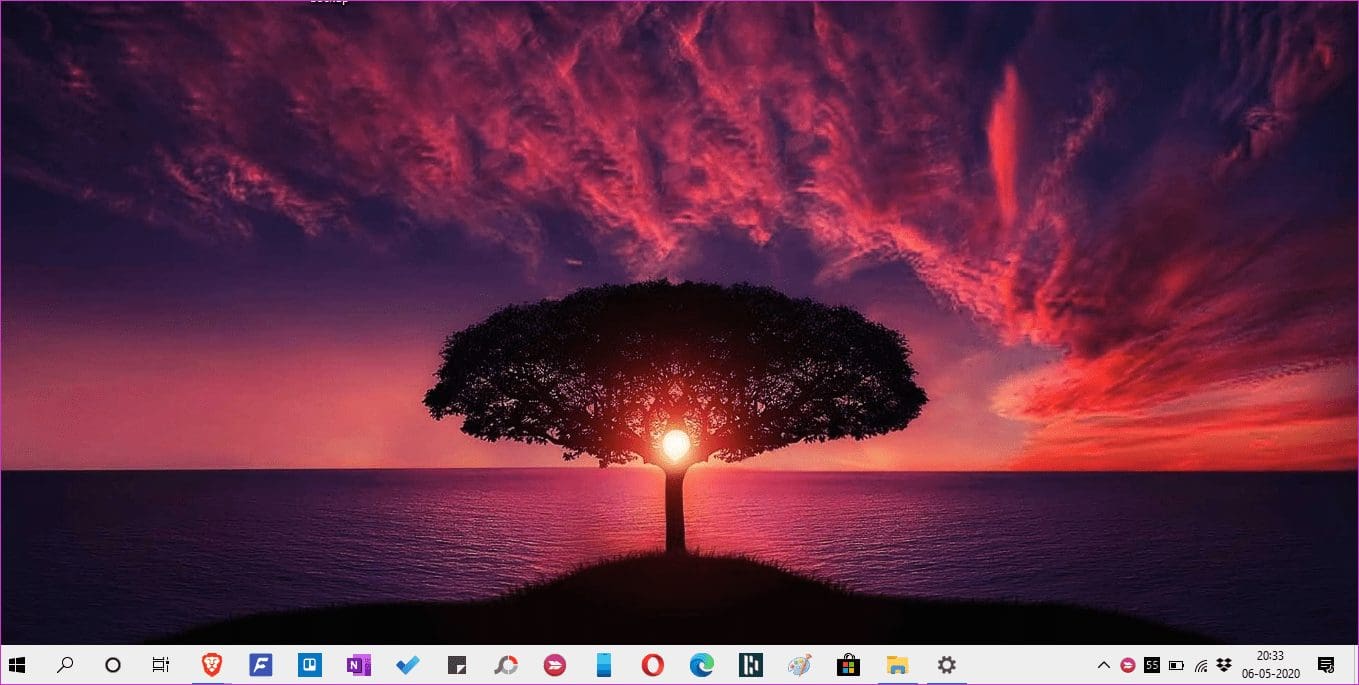 Top 4 Ways to Fix Taskbar Turned White Issue in Windows 10
Most of us click on the Taskbar to access frequently used apps, services, view time, and so on.
Top 4 Ways to Fix Taskbar Turned White Issue in Windows 10
Most of us click on the Taskbar to access frequently used apps, services, view time, and so on.
 How to Fix Windows 10 Invisible Taskbar Icons Issue
Pinning the frequently used apps to the taskbar is quite helpful.
How to Fix Windows 10 Invisible Taskbar Icons Issue
Pinning the frequently used apps to the taskbar is quite helpful.
 8 Best Ways to Fix Taskbar Disappeared or Missing on Windows 11
The Windows 11 taskbar is where you can find your favorite apps and the Start menu.
8 Best Ways to Fix Taskbar Disappeared or Missing on Windows 11
The Windows 11 taskbar is where you can find your favorite apps and the Start menu.
 Top 14 Ways to Fix Windows 11 Taskbar Not Working
Microsoft completely revamped the taskbar in Windows 11.
Top 14 Ways to Fix Windows 11 Taskbar Not Working
Microsoft completely revamped the taskbar in Windows 11.
 How to Fix Taskbar Icons Missing on Windows 11
Windows 11's new Taskbar looks great and feels modern, but it's not as perfect as it used to be.
How to Fix Taskbar Icons Missing on Windows 11
Windows 11's new Taskbar looks great and feels modern, but it's not as perfect as it used to be.
The article above may contain affiliate links which help support Guiding Tech. The content remains unbiased and authentic and will never affect our editorial integrity.

This is what helped me and I hope you add it, a check for Nvidia FPS/Performance counter. When I finally removed it, it resolved the issue I had here, where the taskbar would not show itself when I would hover over it on a full-screen app. Which I found on a microsoft forum.